The quick version
- Snow lies on the ground in Rovaniemi for seven months, which is more than half of the year.[1]
- In Rovaniemi, December temperatures average between -4°C and -11°C and have been known to reach -30°C.[2] The polar night lasts for 2 days.[3]
- Lapland has approximately 2,935 km of official snowmobile routes.[4] The highest speed limit in terrain and on routes is 60 km/h.[5]
- To carry a snowmobile safely, ice thickness must be at least 25 centimetres (10 inches).[6] Perch are a common catch in Lapland.[7]
- The Arctic safari booked from this site runs for 3 hours with a live English-speaking guide, from US$137.[8]
| November | December to February | March | |
|---|---|---|---|
| Snow cover | Fresh falls, cover still patchy | Snow on the ground seven months a year[1] | Deep cover, softening in the sun |
| Daylight | Short days, long twilight | Polar night lasts for 2 days[3] | Long, bright afternoons |
| Temperature | Cold, often below freezing | Averages -4°C to -11°C in December[2] | Cold nights, mild afternoons |
| Trails | Trails open as snow settles | 2,935 km of official routes in Lapland[4] | Firm, fast trails on cold mornings |
| Lake ice | Lakes start to freeze over | Ice needs 25 cm to carry a snowmobile[6] | Solid ice on cold mornings |
| Recommended for | Early rides and quiet trails | Darkness and aurora nights | Long light and fast snow |
The highest speed limit for snowmobiles in terrain and on routes is 60 km/h. On ice-covered water areas the speed limit is 80 km/h, except on routes on ice-covered water areas, where the limit is 60 km/h.
Is a snowmobile ride worth it in Rovaniemi?
Before you ride
How long the snowmobile season lasts in Rovaniemi
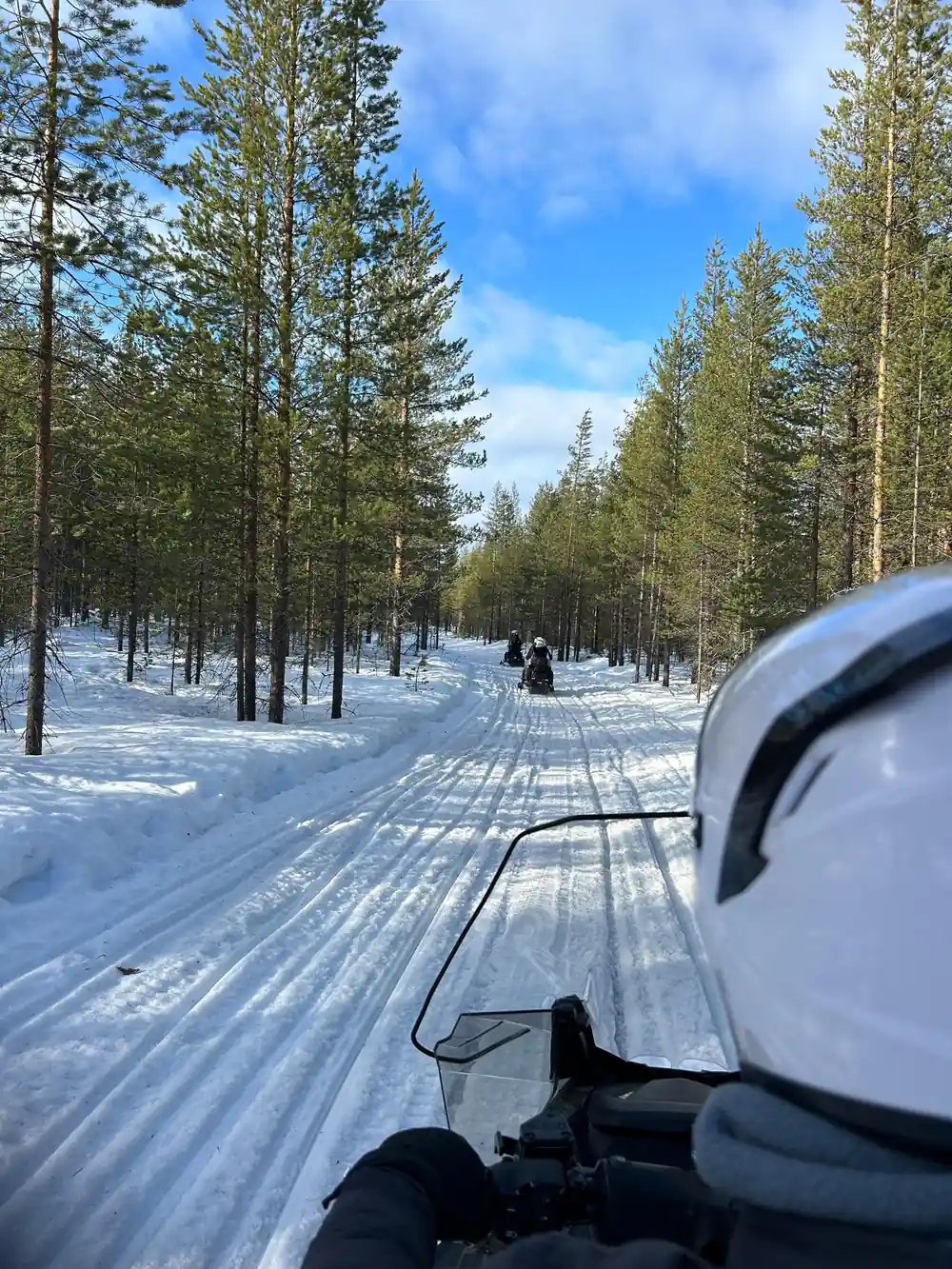
Rovaniemi sits on the Arctic Circle, and the winter that comes with it is long. Snow lies on the ground here for seven months, more than half of the year.[1] The city is the last big stop on the road north, and the Arctic Circle itself runs through Santa Claus Village, eight kilometres north of the city centre.[10] For snowmobiles, that means a long window of riding rather than a few weeks of luck. Lapland has approximately 2,935 km of official snowmobile routes.[4]
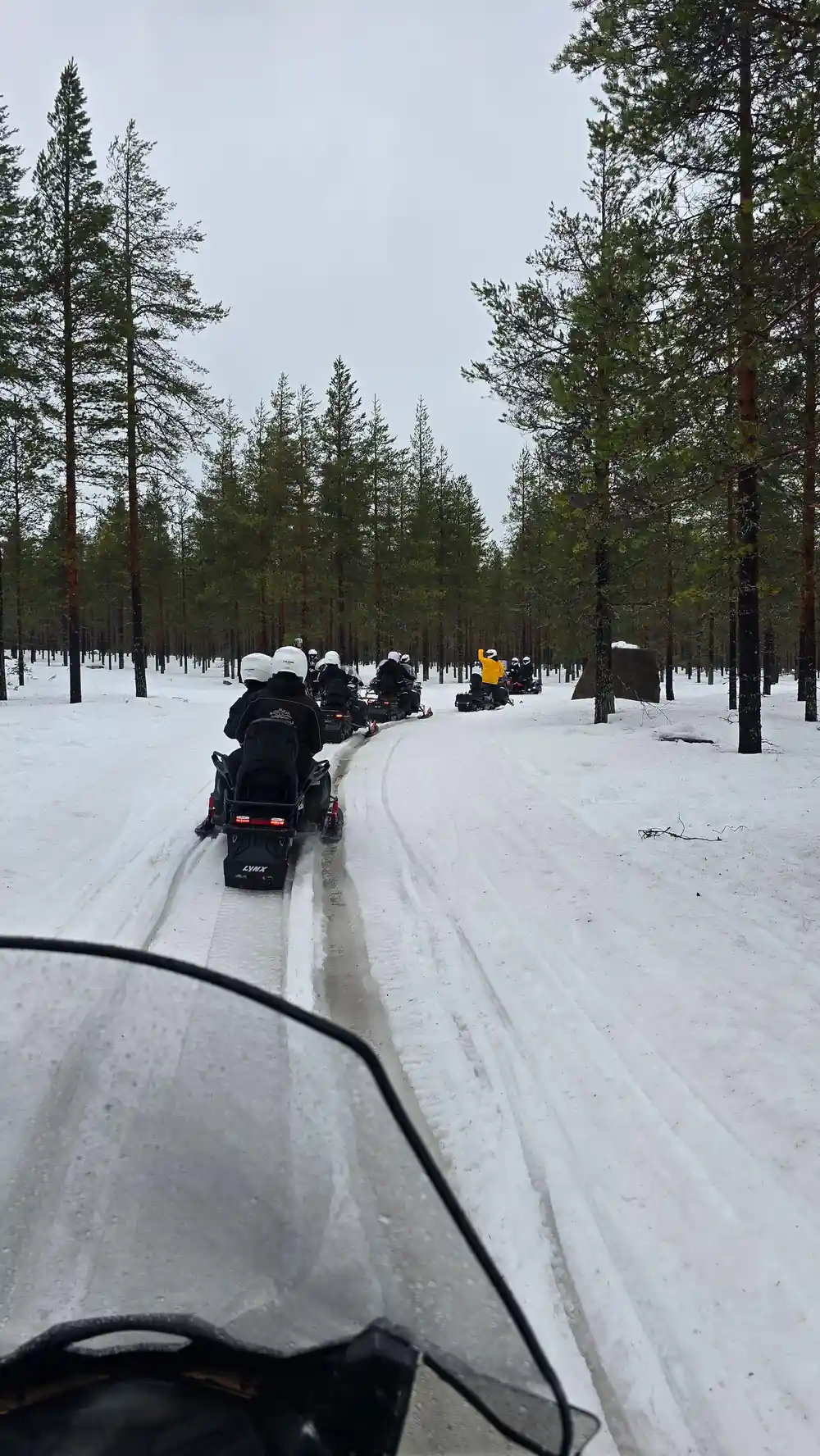
It is a busy season. Over half a million tourists visit Rovaniemi each year, and 65% of them are foreign tourists.[11] Around town you see the same rhythm as anywhere north of the Arctic Circle: snow clearing at dawn, sledges parked outside hotels, and groups heading out in thermal suits with helmets under their arms. The tour booked from this site, Rovaniemi: Drive New 2025 Snowmobiles on Arctic Safari, takes 3 hours with a live English-speaking guide, from US$137, and is rated 4.71 from 2,278 reviews.[8]
Timing comes down to what you want from the ride. Early winter is quiet and changeable, midwinter is dark and dramatic, and spring is bright and fast. Whichever month you choose, the shape of a good day on the trail is the same: read the conditions in the morning, ride within them, and leave room for a stop with a hot drink.
November: early season and unreliable snow
Early winter is the waiting month. Daylight shrinks to a few hours of flat grey light, the sun barely lifts above the horizon, and the first real snow arrives in bursts between milder days. Some years the ground turns white early and stays white. Other years it thaws and refreezes a few times before winter settles in properly. Trails open when there is enough snow to work with, and lakes are only beginning to freeze, so early rides tend to stay in the forest rather than out on open ice.
Book early season the way you would book anything in changeable weather: with room to move. Keep a spare day free, check the forecast before you pack, and be ready to accept a shorter route if conditions ask for it. The tour booked from this site offers reserve now and pay later, and free cancellation up to 24 hours in advance for a full refund.[8] Clothing matters more than usual now. Wet snow soaks into soft fabrics, so a waterproof shell over a thermal base layer is worth more than a heavy coat that turns damp and cold.
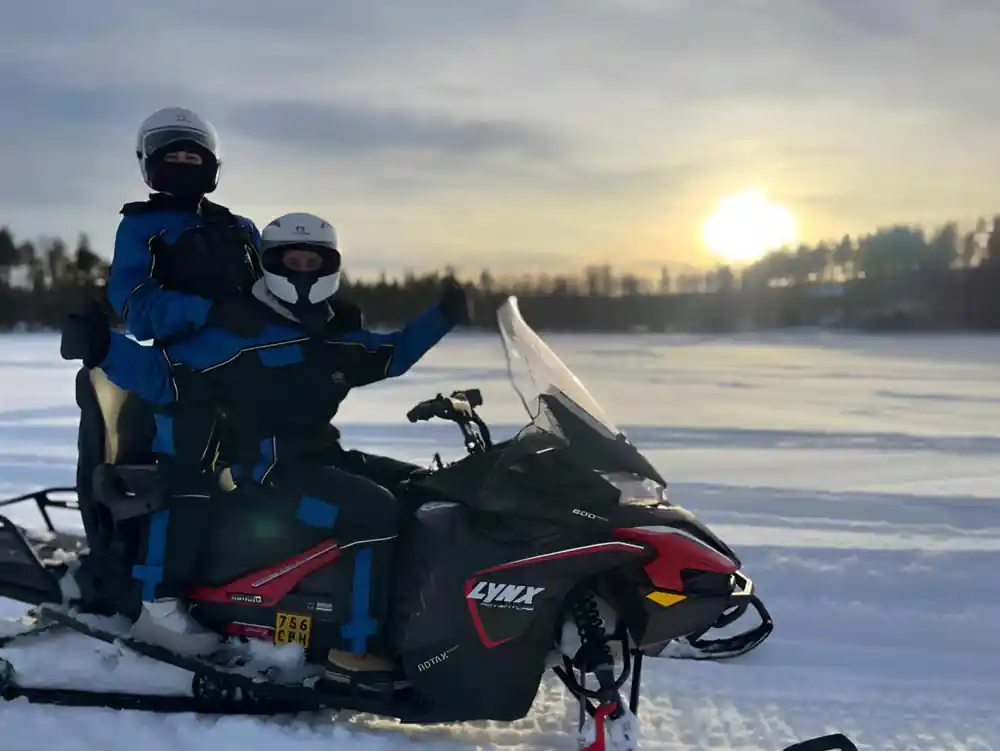
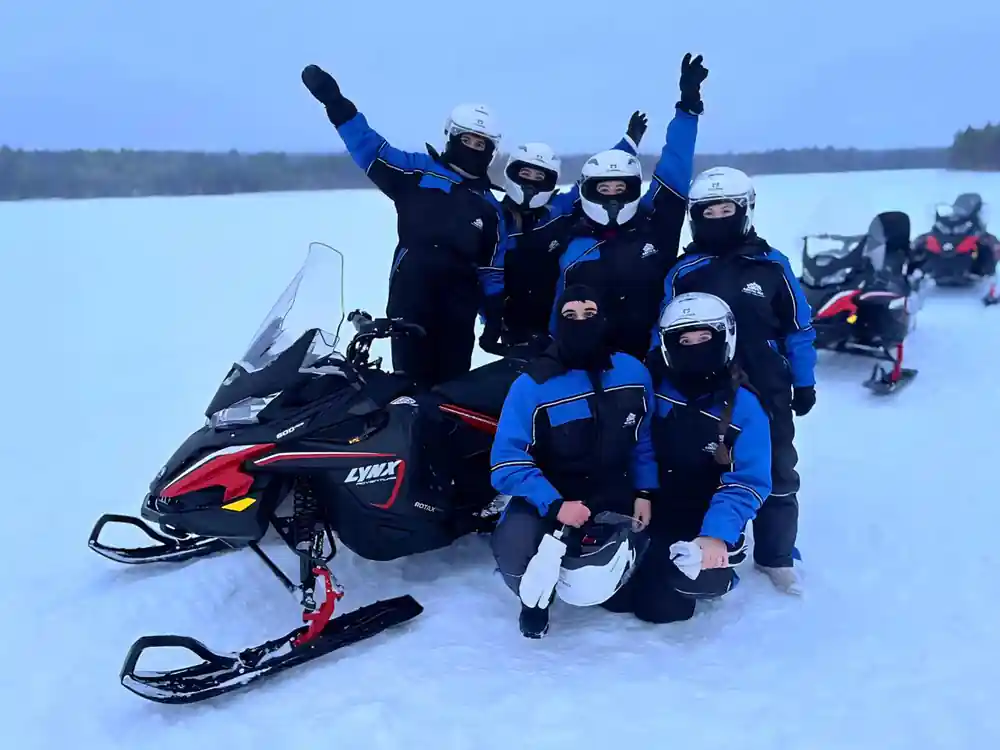
Snowmobiles lined up on a frozen lake before the group sets off.
December to February: peak winter and polar night
Midwinter is the picture most people carry home: deep snow, blue twilight, headlights on a white trail. In Rovaniemi the polar night lasts for 2 days, the shortest and strangest stretch of the year.[3] Around it, the days are brief and coloured in long, low light, and the sun shows up as a glow rather than a disc. Cold is part of the deal. December temperatures average between -4°C and -11°C, and have been known to reach -30°C.[2]
Riding in the dark is easier than it sounds. Snow reflects whatever light there is, your headlight picks out the trail ahead, and a familiar route feels new. The tour booked from this site runs for 3 hours with a live English-speaking guide, and starting times are shown when you check availability.[8] If you are travelling with children or nervous first-timers, shorter rides with plenty of stops beat long ones, and a warm drink halfway through can rescue an afternoon.
Two things surprise visitors most in midwinter. The first is how quickly you warm up once you are moving, and how quickly you cool down the moment you stop. The second is how quiet it is: snow absorbs sound, and a group of machines can cross a lake with little more than the engines to break the silence. Plan your stops, keep moving, and the cold becomes part of the fun.
Frozen lakes: when the ice is thick enough
A frozen lake is the flattest, fastest and strangest surface you will ever ride. It is also the one that deserves the most respect. To carry a snowmobile safely, ice thickness must be at least 25 centimetres (10 inches).[6] That thickness does not arrive evenly. Bays, narrows, springs and outlets freeze at different speeds, and a layer of snow on top insulates the ice and slows it down. Colour and old tracks seen from the shore tell you very little about what is underneath.
This is where a guided ride earns its place. Someone who knows the water decides where the group crosses, and the line can change from week to week. Ice fishing is the natural companion to a lake ride. Perch are a common catch in Lapland and are known for their aggressive bites.[7] A short ride out, a hole drilled in the ice and a hot drink in your hand is a very Lapland way to spend a bright, windless afternoon.
If you are riding on your own, treat every lake as unknown on the first visit and ask locally before you go out. Ice that holds a person is not necessarily ice that holds a machine, and the difference is not visible from the trail. Guided groups ride routes chosen by people who know the local water, and the crossings are often the part of the day people remember.
from US$137
The Arctic safari booked from this site runs for 3 hours with a live English-speaking guide and holds a 4.71 rating from 2,278 reviews.[8]
March: bright days and faster trail conditions
Late winter is the sweet spot for many riders. The light returns first, then the warmth, and by late in the month there is daylight for a full afternoon on the trail. Cold nights set the surface up hard and fast, and the sun softens it after lunch. Mornings are usually the quickest and coldest part of the day, while south-facing slopes are the first to turn heavy and wet.
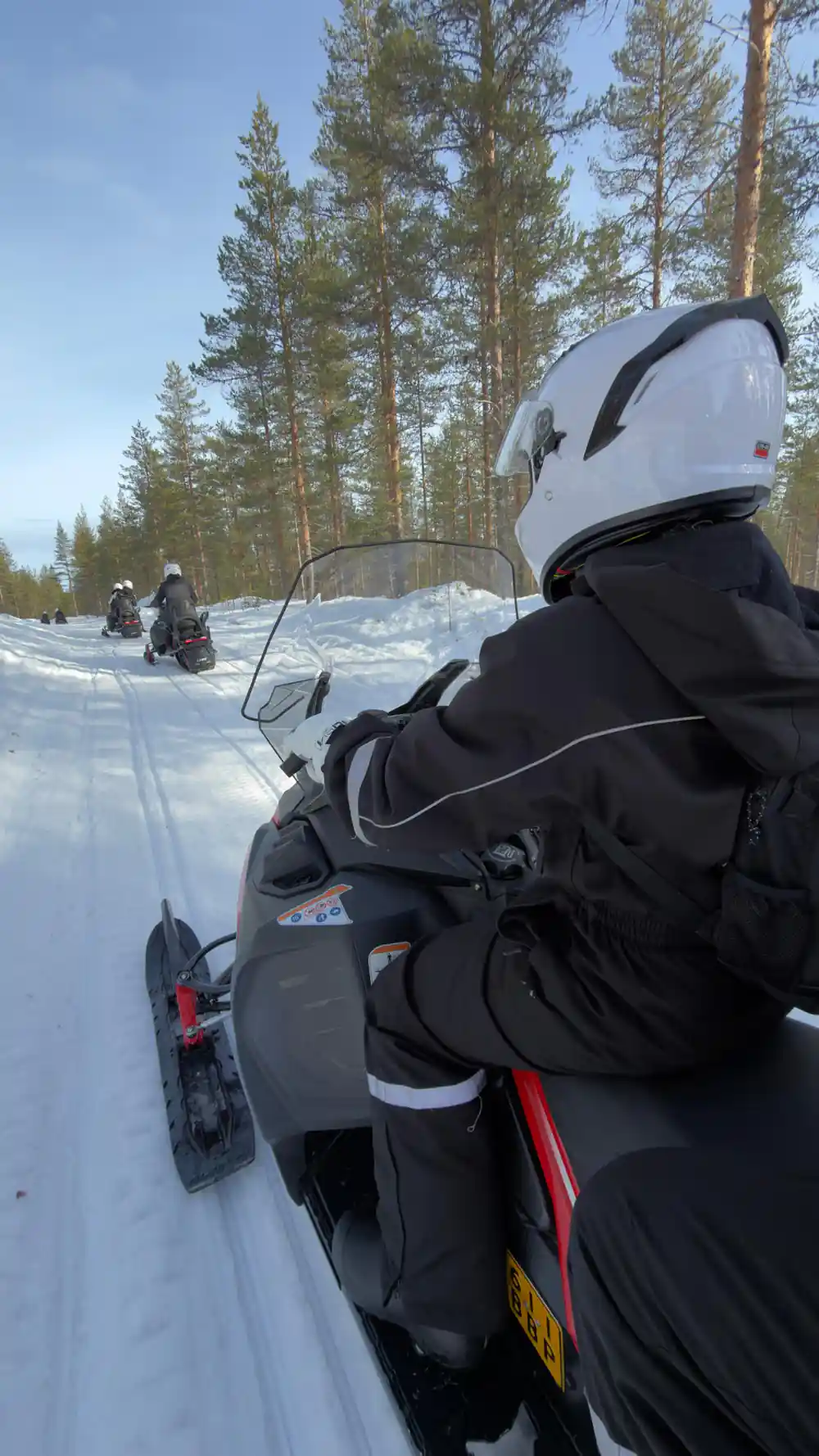
Speed limits are worth knowing before you press the throttle. The highest speed limit for snowmobiles in terrain and on routes is 60 km/h. On ice-covered water areas the speed limit is 80 km/h, except on routes on ice-covered water areas, where the limit is 60 km/h.[5] Guides set a pace that suits the group, the light and the snow, and on a first ride that is usually well inside the limit. Get a feel for the machine on a straight stretch before you ask more of it.
Spring riding also means slush, standing water on the ice and bare patches on busy tracks. Waterproof boots and an extra pair of gloves make a bigger difference now than they did at the heart of winter. If you only have one day and want the best chance of sun on snow, aim for a morning departure and keep the afternoon free for a walk.
Snowfall, wind and what you ride through
Snow changes character through the winter, and so does the riding. Fresh, dry snow is soft and forgiving, and a machine floats over it rather than cutting through. Wind is the other force to watch. It packs loose snow into a hard, crusty surface, drifts it across lakes and trails, and can wipe out the track you were following within minutes. In the forest you are sheltered; out on open ice there is nothing to slow it down, and flat light can hide the shape of the ground.
Falling snow is the gentlest condition of all and the one that slows groups down the most, because the rider in front disappears into a white blur. Guides usually shorten the route or stay on marked trails when it is snowing hard. If you are riding in the afternoon, watch for the temperature dropping as the sun goes: snow that was soft and grippy can set into an icy crust in an hour.
The landscape you ride through is part of the appeal. In Lapland, the forest gradually gives way to treeless fells known as tunturi, with Mountain Birch forming a wind-shaped belt at the tree line and stands of Scots Pine and Norway Spruce on the more sheltered, moist ground below.[12] Reindeer country overlaps with all of it, and the number of reindeer in Lapland is roughly equal to the number of people.[13] If a herd crosses the trail, stop and let them pass.
Cold air on the move and aurora nights
The cold on a snowmobile is different from the cold standing still. Air moving past you at speed strips warmth from exposed skin, and a fast stretch across a lake can feel far colder than the thermometer suggests. Cover everything. A balaclava or buff under the helmet, mittens rather than gloves, thick boots and goggles you can clear with one hand make more difference than an extra jumper. Keep a dry pair of gloves in a pocket and stop for a warm drink before you feel properly cold, not after.
Dark winter nights are the reason many people come north in the first place. Rovaniemi has over 200 aurora displays documented per year.[14] Nothing guarantees a display on the night you ride, so give yourself more than one dark evening if the lights are the main reason for the trip, and treat a clear sky over the trail as a good night on its own.
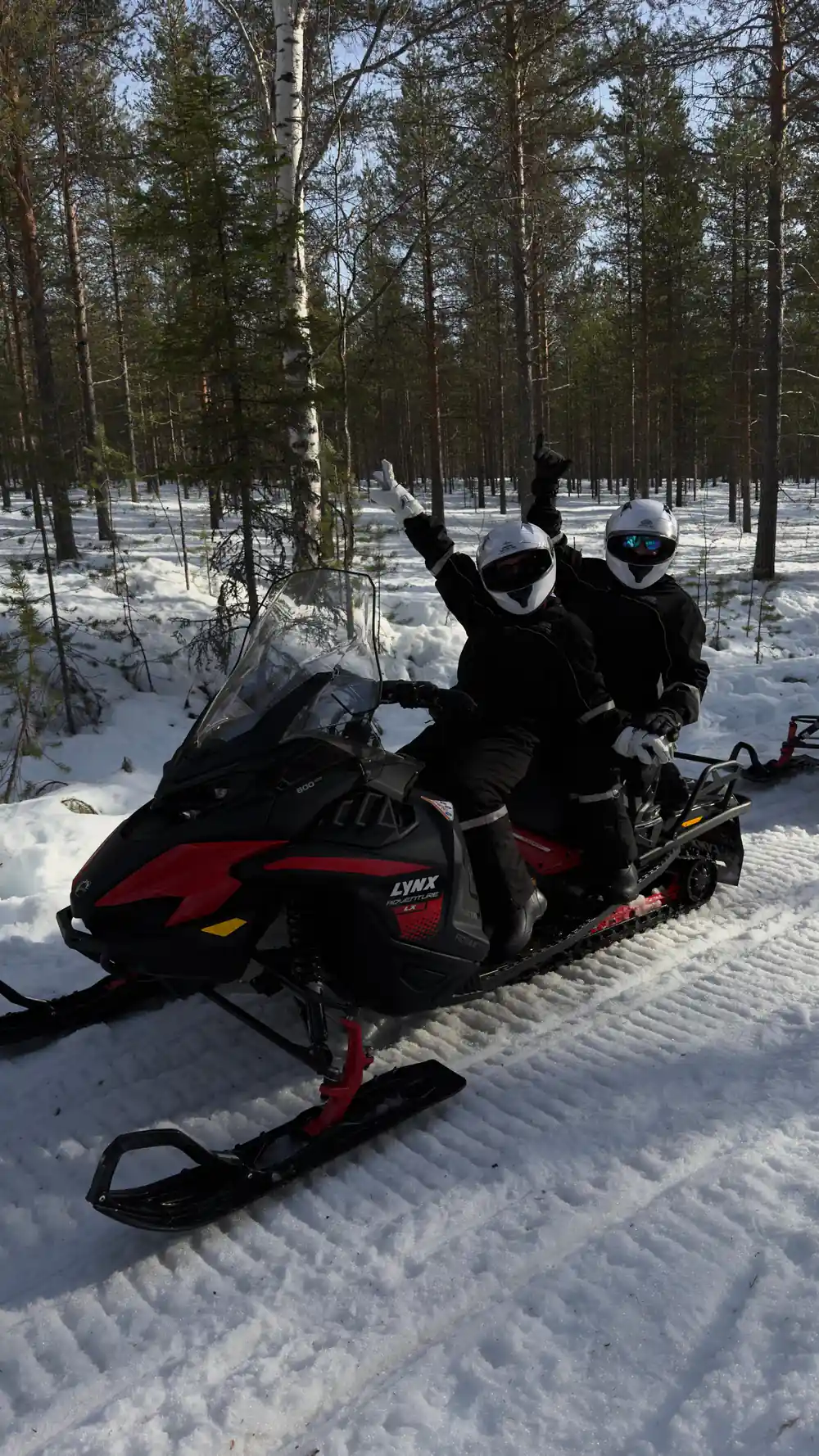
Before you travel, it is worth reading the rules that apply to the machine you will be driving. Off-road, snowmobiles may be driven by persons aged 15 or over.[9] A snowmobile is steered with handlebars and a throttle, so a few minutes of practice on flat ground goes a long way, and the first stretch of any ride is for getting used to the weight and the steering.
Snowmobile speed limits in Finland
All three limits come from Metsähallitus guidance on off-road traffic.[5]
Snowmobile tours from Rovaniemi
From-prices are US dollar GetYourGuide listing prices.[8][15][16][17] Child seats and rates are arranged with the operator at booking; both columns show the listed from-price.
When to book your snowmobile ride
Plan your snowmobile day
Pick your month
Early winter is changeable, midwinter is dark and cold, and spring days stretch out.
Book with flexibility
Reserve now and pay later, with free cancellation up to 24 hours in advance for a full refund.[8]
Dress for the ride
Thermal base layer, fleece, windproof shell, mittens, balaclava and goggles. Cold at speed is the thing to plan for.
Know the rules
Off-road, snowmobiles may be driven by persons aged 15 or over, and the top limit on terrain and routes is 60 km/h.[5][9]
Watch the ice
To carry a snowmobile safely, ice thickness must be at least 25 centimetres (10 inches).[6]
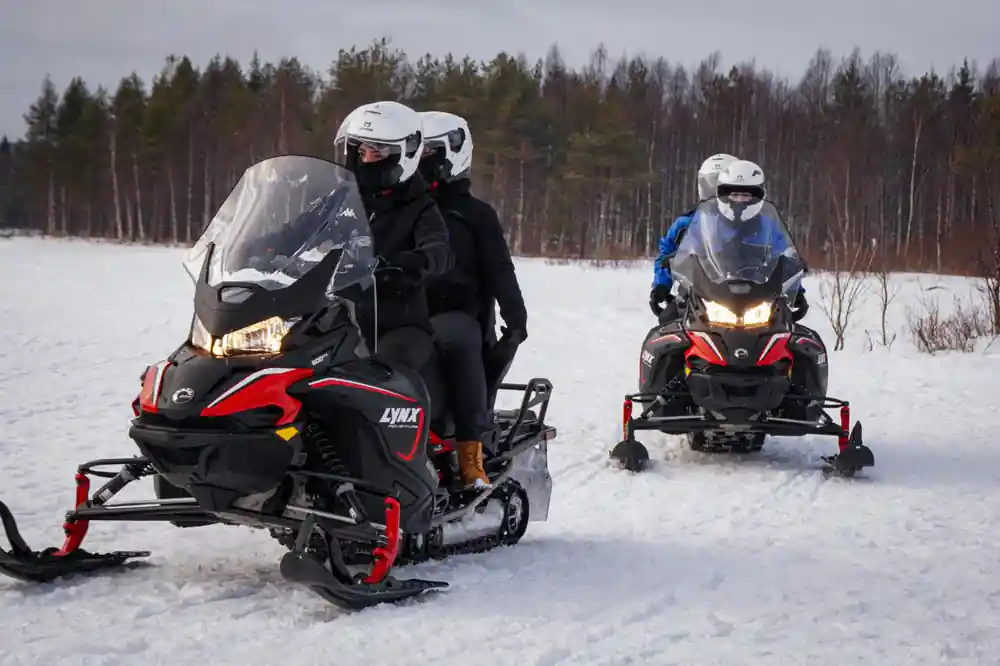
Ride new snowmobiles across the Arctic trails
from US$137Reserve now & pay later