The quick version
- Snow stays on the ground in Rovaniemi for seven months, more than half of the year.[1]
- Ice must be at least 25 centimetres thick to carry a snowmobile safely.[2]
- Lapland has approximately 2,935 km of official snowmobile routes.[3]
- On terrain and routes the limit is 60 km/h; on ice-covered water areas it is 80 km/h.[4]
- Ride new 2025 snowmobiles on a 3-hour Arctic safari from US$137.[5]
- Top choice New 2025 Arctic Safari from US$137 Duration3 hours[5]Reviews4.71 from 2,278 reviews[5]CancellationFree cancellation[5] Check availability
- Snowmobile & Ice Fishing from US$218 Duration5 - 6 hours[6]Reviews4.79 from 920 reviews[6]CancellationFree cancellation[6] See this tour
- Husky, Reindeer & Snowmobile from US$228 Duration6 hours[7]Reviews4.61 from 1,288 reviews[7]CancellationFree cancellation[7] See this tour
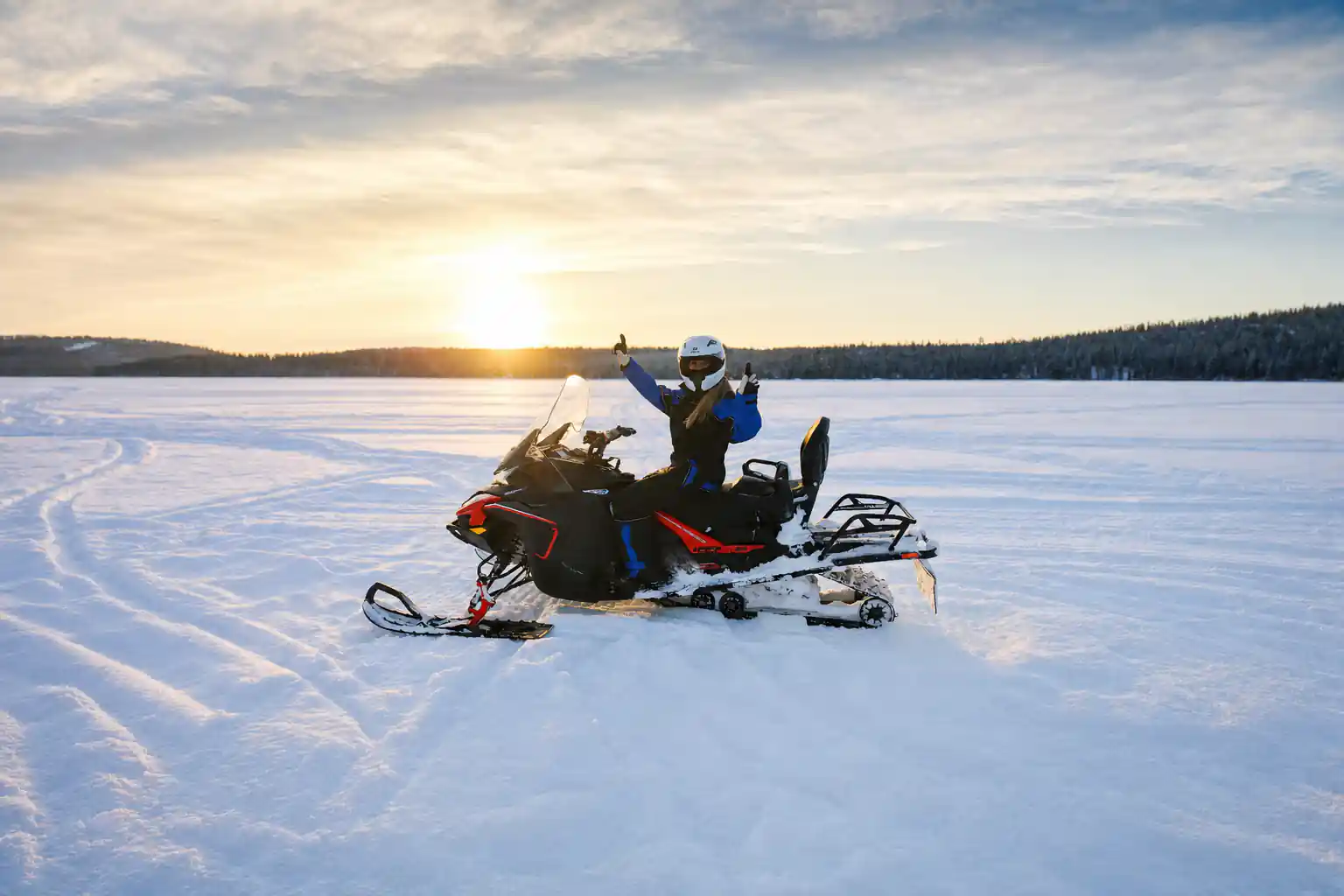
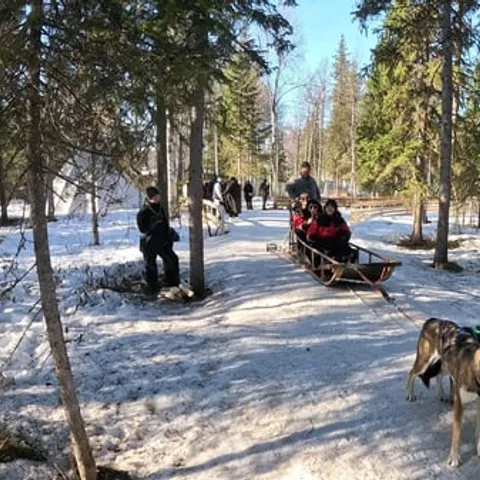
That’s because the number of reindeer in Lapland is roughly equal to the number people.
A Practical Arctic Choice
Before you ride
- Confirm pickup and start time with your operator
- Book in advance and keep your reservation on your phone
- Arrive early before departure
- Dress in layers with a windproof outer shell
On the trail
- Listen to the safety briefing and stay behind your guide
- Know the meeting point or use hotel pickup if offered
- Ride at the speed set for the route and conditions
- Wear goggles or a visor; snow glare is strong in daylight
How Lapland Lake Ice Forms and Thickens
Rovaniemi is a snow town. Snow stays on the ground for seven months, more than half of the year.[1] By December the average temperature sits between -4°C and -11°C, and it has been known to drop to -30°C.[8] That cold builds the frozen lakes you will ride across, turning open water into a white highway. The cold that makes your cheeks sting is the same cold that builds the ice roads you will ride, and it is part of the experience from the moment you zip up your suit.
Before any safari sets out, guides check ice conditions. To carry a snowmobile safely, ice thickness must be at least 25 centimetres.[2] On the big lakes near Rovaniemi you will see drill holes and tracks that show where other riders have already been. Guides drill a test hole if they are unsure; if the drill comes up clean and the ice layers look solid, the group can move out. Look for the small snow mounds left by other riders' tracks; they mark a line that has already proved safe.
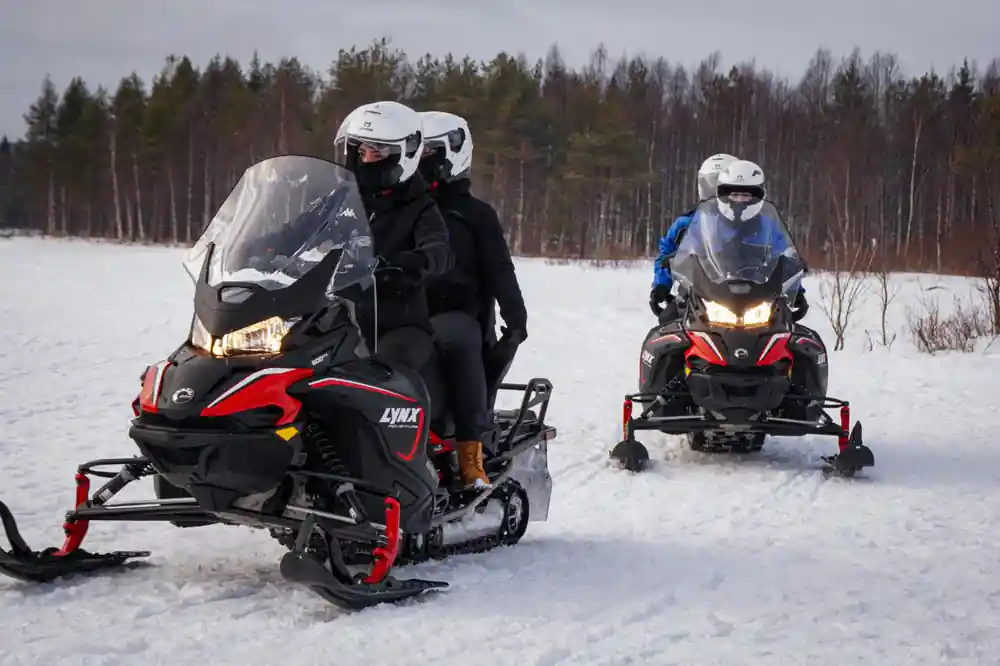
If you are new to this, book a tour with a live English-speaking guide; the 3-hour safari on new 2025 snowmobiles starts from US$137.[5] You won't be alone: over half a million tourists visit Rovaniemi each year, and 65% are foreign.[9] The machines are simple to operate and the safari centres are used to visitors who have never ridden before, so there is no need to arrive with experience.
Why Thick Ice Booms and Cracks
Lake ice is never silent. As the temperature falls and rises, the ice expands and contracts, and the surface cracks with a sound like a gunshot or a low boom. In the Arctic night that noise carries a long way. Riders soon learn that a booming lake is usually a healthy lake.
Thick ice can still move, and pressure ridges can form where sheets meet. Guides steer around those and head for the smooth, dark ice that gives the fastest ride. An organised safari follows a chosen track rather than wandering at random.
On open ice you may reach the legal top speed for ice-covered water areas, which is 80 km/h, unless you are on a marked route on the ice where the limit is 60 km/h.[4] The feeling of acceleration over a white lake is one of the purest winter pleasures in Lapland. A ride across a frozen lake is also the smoothest part of the trip. With no branches to dodge and no ruts to bounce over, you can relax, open your shoulders, and let the machine glide.
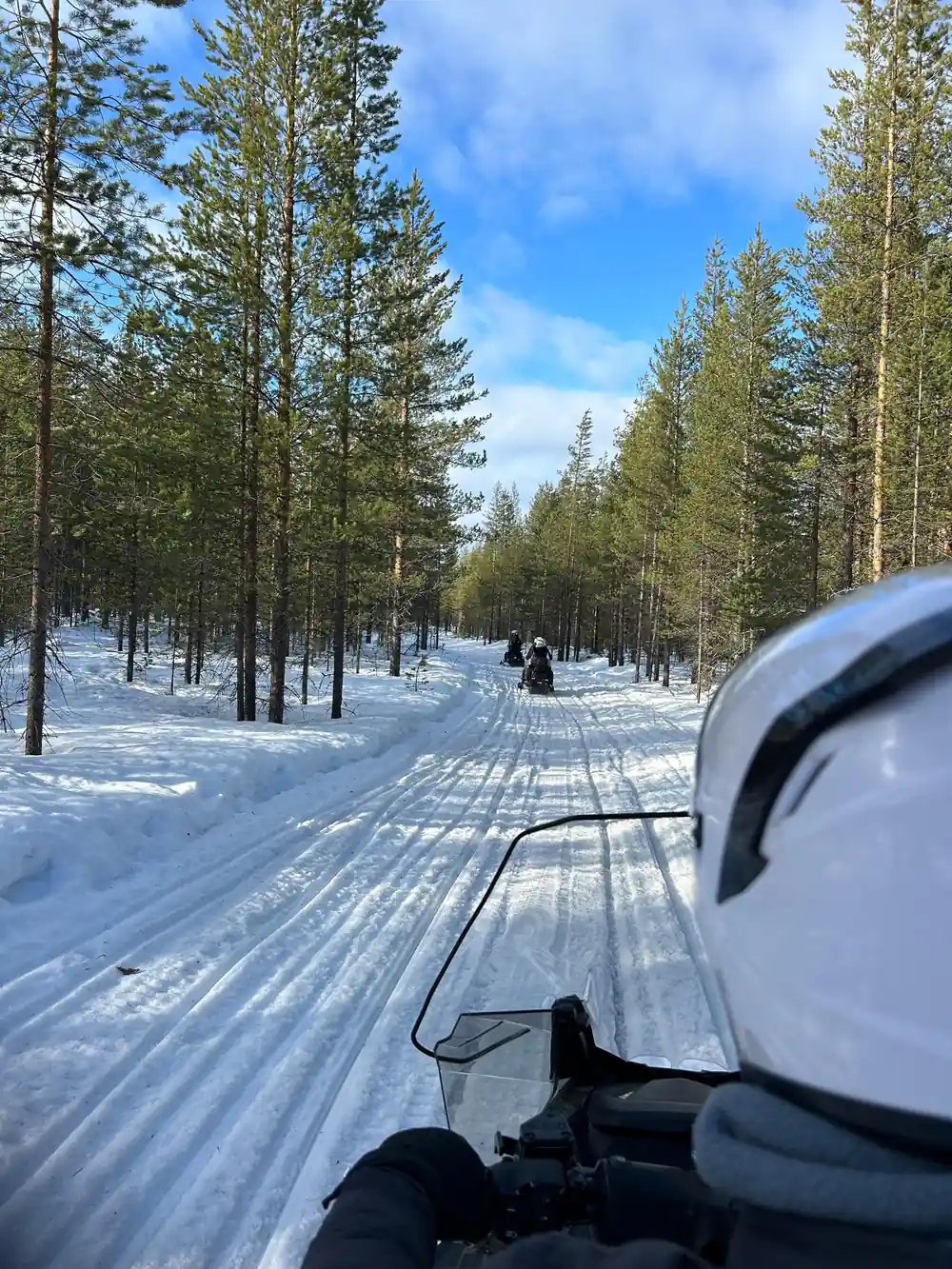
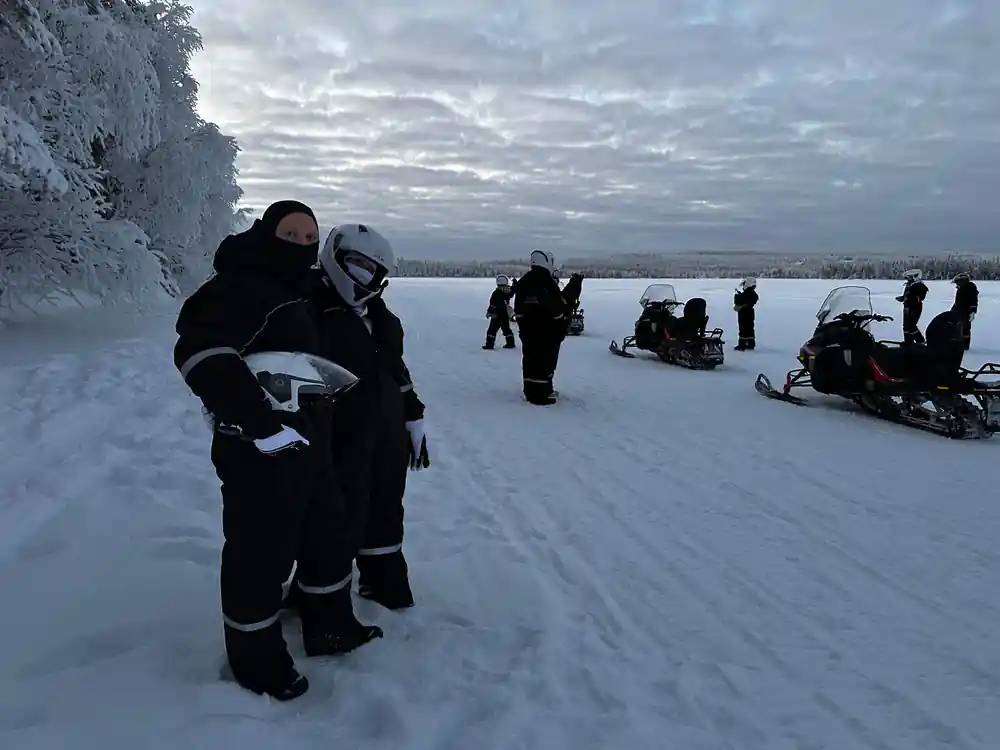
A guide checks ice and route before the group moves onto the frozen lake.
Open Ice: The Fastest Riding of the Day
The part that stays with riders is the stretch across a frozen lake. There are no trees, no bumps, just a wide white surface and the sky. On such ice, the guide may allow the group to spread out and ride at a good pace.
Keep your speeds sensible. In terrain and on routes, the highest speed limit for snowmobiles is 60 km/h.[4] Ice-covered water areas themselves allow 80 km/h.[4]
That speed is only safe when the ice below you is sound. For snowmobiles, the minimum safe ice thickness is 25 centimetres.[2] Operators in Rovaniemi check this, but the final call always rests with your guide on the ice. The sensation of riding on a lake is quite different from the forest: the surface is broad, the light is even, and the sound of the engine opens out around you.
Tykkylumi: The Snow-Laden Spruce Forest
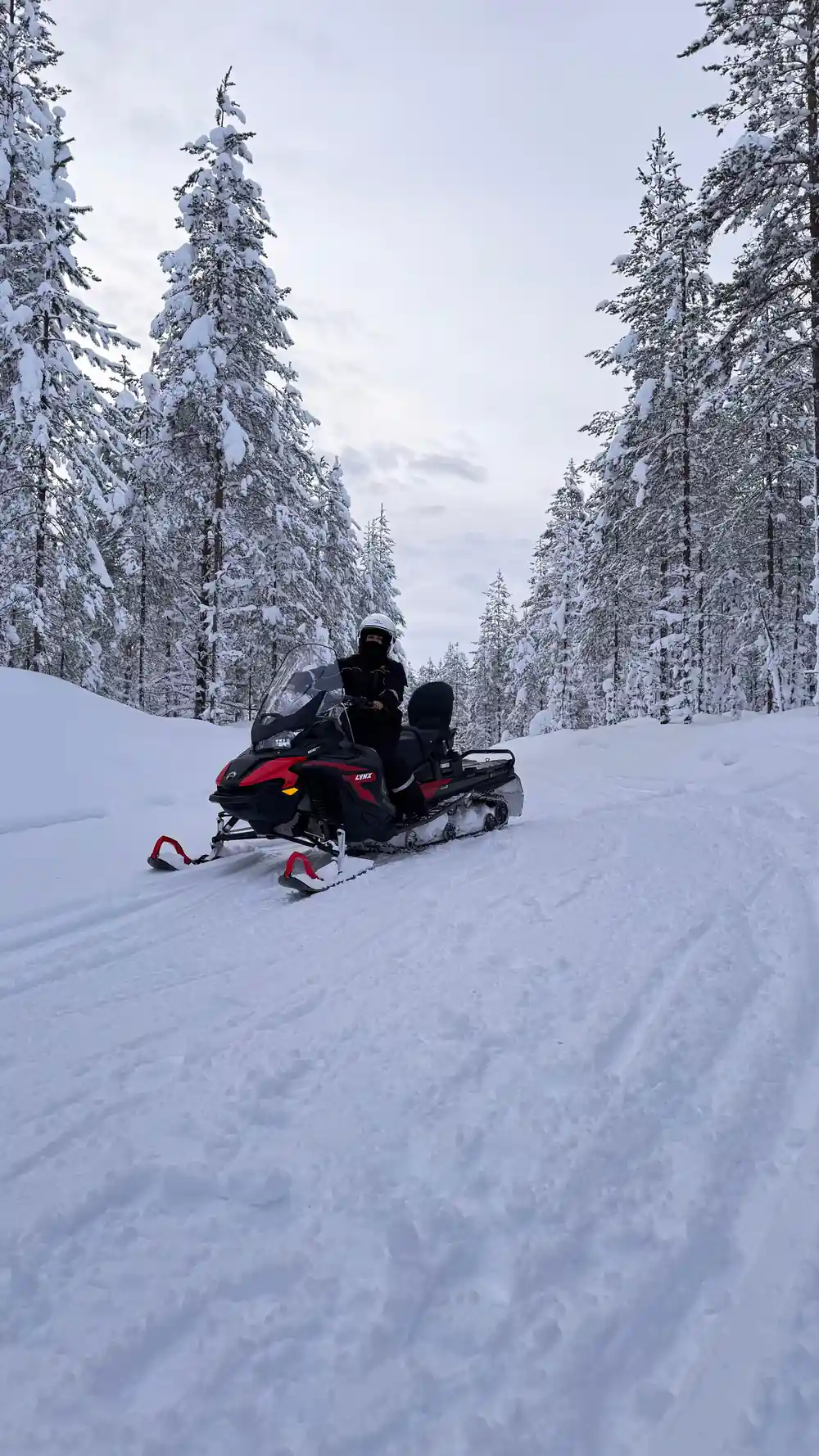
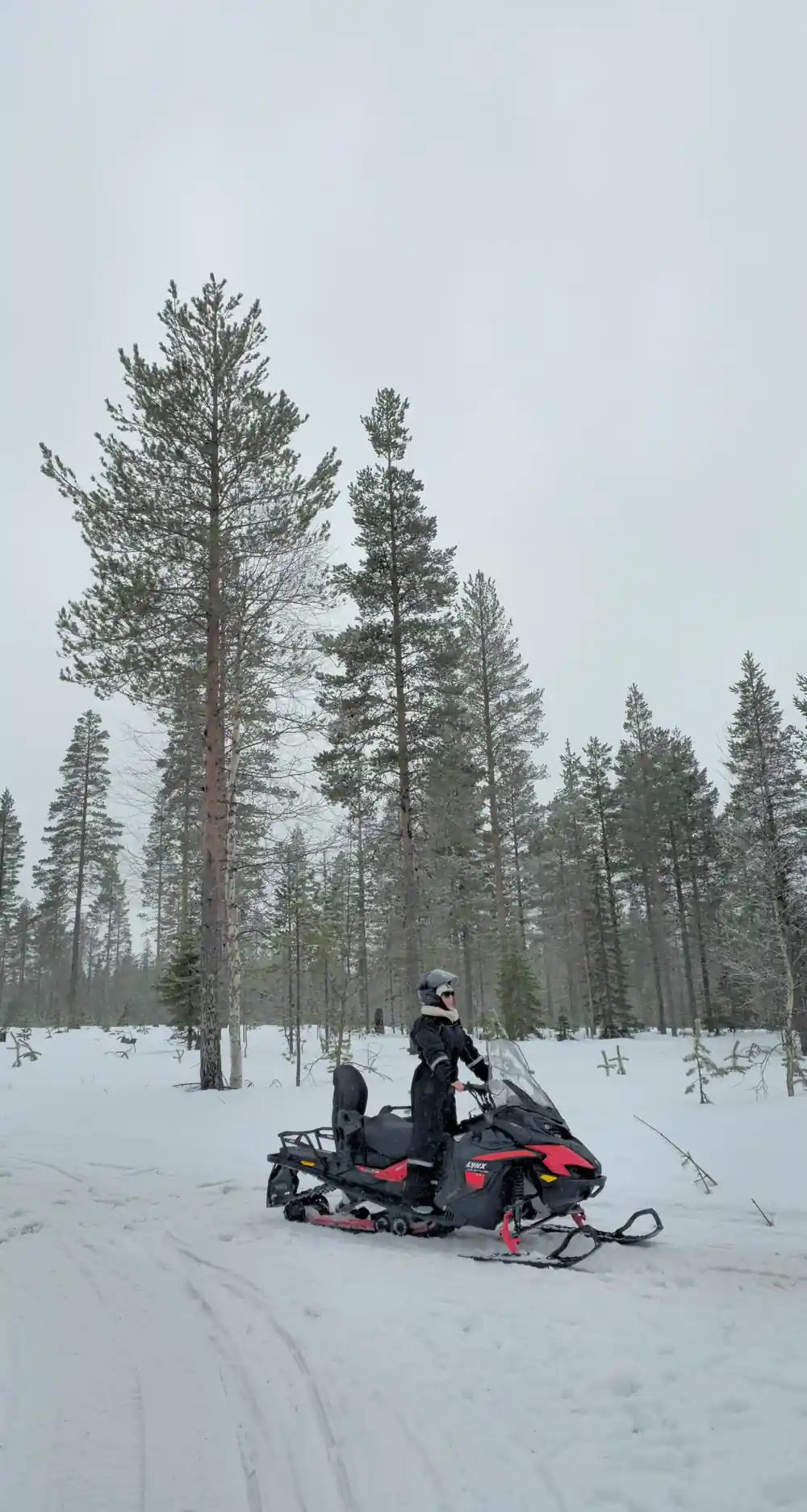
When the snow falls on the boreal forest around Rovaniemi, it piles onto every branch and needle. Locals call this heavy snow tykkylumi. It turns spruce and pine into white sculptures, and it makes the forest feel like a sealed, hushing room.
The forest here has clear layers. In Lapland, the boreal forest gradually gives way to treeless fells called tunturi; Mountain Birch forms a wind-shaped belt at the tree line, while below you find Scots Pine and Norway Spruce in sheltered, moist sites.[10] Snowmobile trails cut through these stands and open up sudden views.
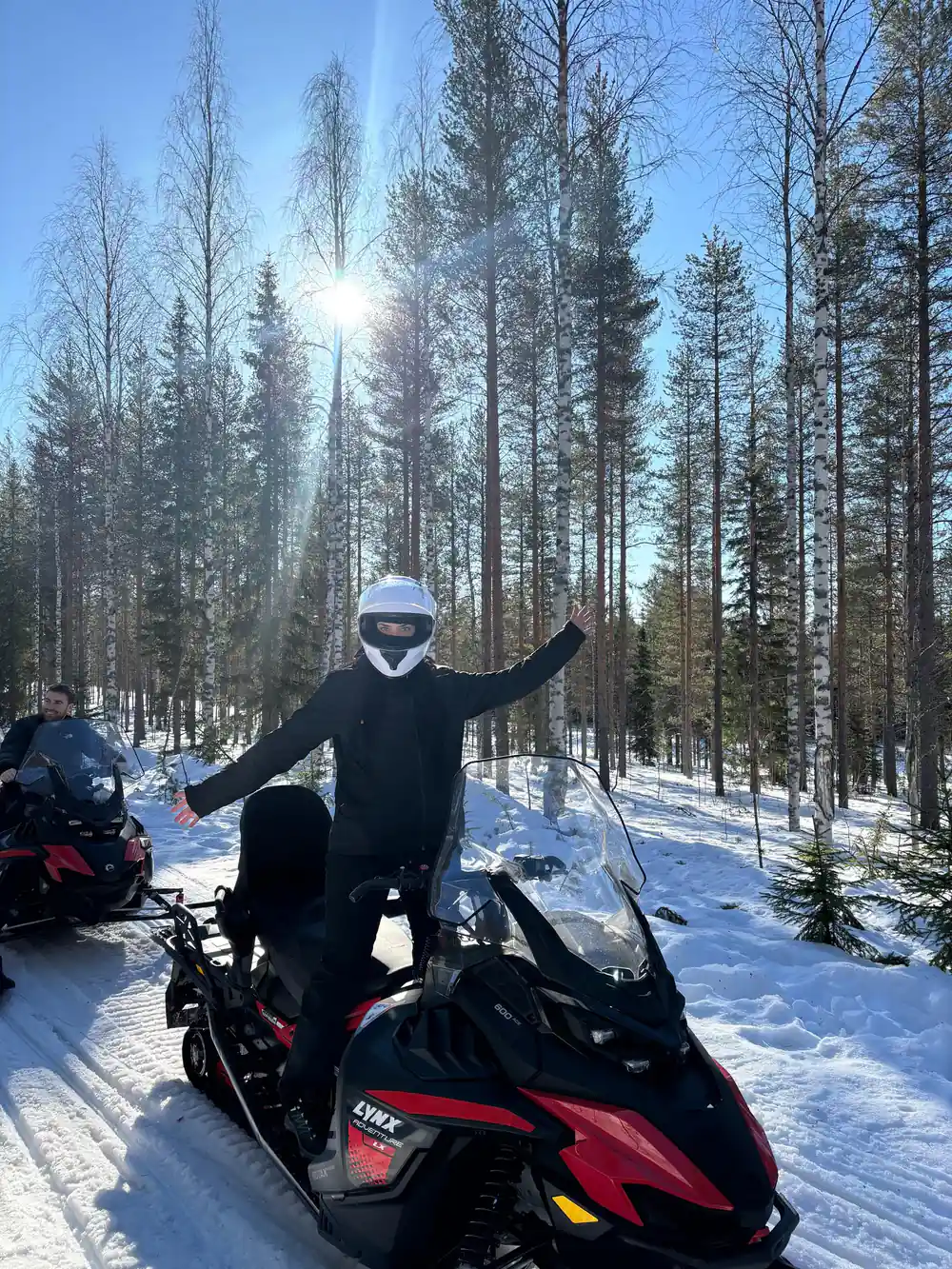
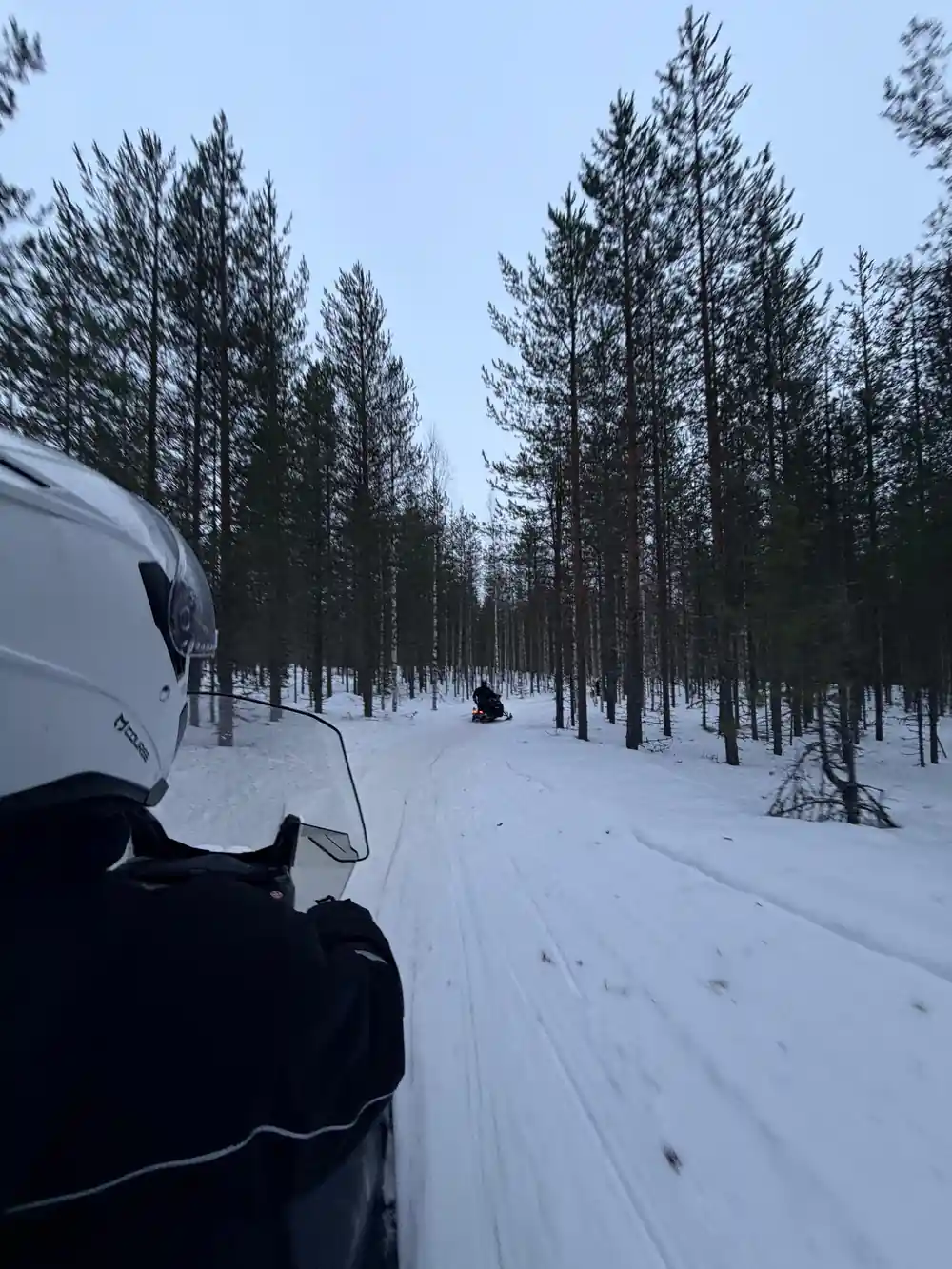
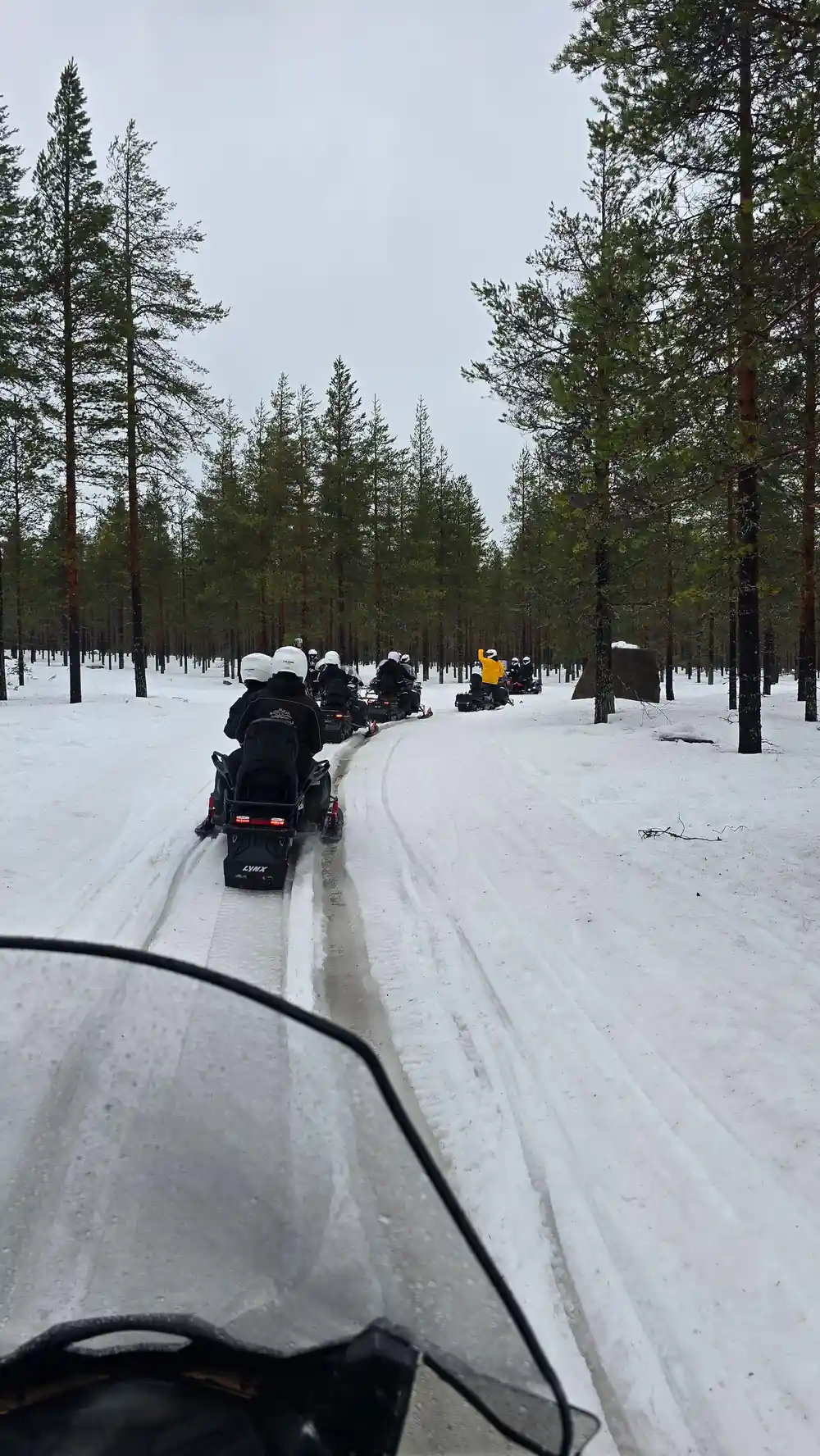
Riding under snow-laden trees is a different skill from riding on a lake. The trail narrows, corners tighten, and you follow the guide's tracks through a maze of white. It is also where you notice the silence of the Arctic, a quiet that makes the crunch of a snowmobile sound louder than it really is. The path under the pines is often groomed just wide enough for one machine, and the trees hold the snow so still that you feel as if you are riding through a white cathedral.
from US$137
Ride new 2025 snowmobiles on a 3-hour Arctic safari. Live English guide, free cancellation up to 24 hours in advance.[5]
Animal Tracks Along Winter Trails
Look down between the snowmobile tracks and you will often see stories written in the snow: rabbit tracks, fox prints, and the wide, cloven prints of reindeer. In Lapland, the number of reindeer is roughly equal to the number of people.[11] They wander freely and frequently cross the marked routes.
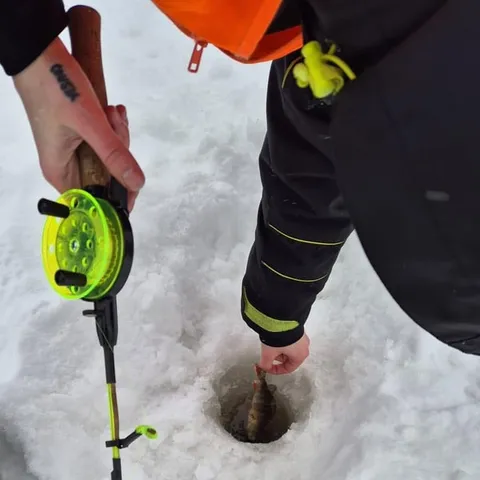
Reindeer are part of everyday life here. They use the same frozen valleys as the snowmobiles. Guides slow down near them. If you stop near a lake, you may also find holes drilled by ice fishers; perch are a common catch in Lapland and are known for aggressive bites.[12]
Wildlife sightings are not guaranteed, but the signs almost always are. A fresh trail of tracks in the morning snow is as much a part of the Rovaniemi snowmobile experience as the machine under you. Look for hare tracks that dart from trailside to trailside and the deeper furrow of a moose crossing; these small clues make each safari feel different from the last.
Winter Snowmobile Trails: Cut, Maintained, and Marked
Rovaniemi is the gateway to a wider network of snowmobile routes. In Finnish Lapland there are approximately 2,935 km of official snowmobile routes.[3] These are the routes you will ride on safari, and they are cut, maintained, and marked with signs.
The tracks are shared by locals and visitors and kept in good shape. Some run beside roads, others dive into the forest and cross lakes. On a day tour you cover only a small slice of that network, but even a short ride shows why the region is built around winter mobility.
When you drive a new 2025 snowmobile on an Arctic safari, you are riding on these tracks with a live English guide and free cancellation up to 24 hours in advance.[5] It is a practical way to experience the Lapland trail system without organising your own machine or fuel. If you do not want to manage a map in the cold, following a guide is the easiest way to experience that network. You concentrate on the ride, and they handle the route.
The Silence of the Arctic and the Sound of Return
Rovaniemi sits right on the Arctic Circle, and the polar night lasts just 2 days.[13] That means the sun dips away very briefly before the days start lengthening again. In midwinter, though, darkness still wraps the forests and lakes in a deep silence.
The northern lights are part of the draw here: Rovaniemi has over 200 aurora displays documented per year.[14] On a clear night, the green curtains can appear above the treetops, and a snowmobile becomes a quiet way to chase them.
The Arctic Circle runs through Santa Claus Village, eight kilometres north of the city centre, where it is clearly marked.[15] After a day on the tracks, the return to Rovaniemi feels like returning from another world, with cold cheeks, a warm coffee, and the sound of the engine still humming in your ears. Whether you ride in daylight or after dark, the snow holds the light of the sky, so the world rarely feels completely black.
Snowmobile speed limits in Finnish Lapland
Limits from off-road traffic rules.[4]
Compare tour prices
From-prices from GetYourGuide listings.[5][6][16]
Planning your safari
Before you ride
Dress in winter layers
Start with thermal underwear, add a fleece, wear an insulated suit, woollen socks, and a windproof outer layer.
Match the safari to your group
Short loops are good for beginners and families; longer routes give more wilderness and more saddle time.
Confirm your pickup
Check whether the tour includes pickup and be ready at the meeting point a few minutes early.
Attend the safety briefing
Your guide will explain the controls, the hand signals, and how to stop safely before you move off.
Follow your guide
Stay in the marked track, keep a safe distance, and stop at the guide's signal to enjoy the view.
Ready to ride Rovaniemi's snowmobile tracks and frozen lakes?
from US$137Reserve now & pay later