The quick version
- Northern Lights Snowmobile Hunt with BBQ: a 3.5-hour evening ride from Rovaniemi with pickup included, a live English-speaking guide and a campfire stop.[1]
- From US$183, with free cancellation up to 24 hours in advance for a full refund, and you can reserve now and pay later.[1]
- Snow lies on the ground in Rovaniemi for seven months, more than half the year, and December temperatures average between -4°C and -11°C.[2][3]
- Rovaniemi has over 200 aurora displays documented per year, but no single night is guaranteed and cloud can hide the whole sky.[4]
- In Finland, off-road snowmobiles may be driven by persons aged 15 or over, which is worth knowing if you are booking for a family.[5]
| Snowmobile Hunt + BBQ | New Snowmobiles Aurora | Aurora Campfire Safari | |
|---|---|---|---|
| From | from US$183[1] | from US$183[6] | from US$160[7] |
| Duration | 3.5 hours[1] | 4 hours[6] | 4 hours[7] |
| Guest rating | 4.27 from 229 reviews[1] | 4.51 from 64 reviews[6] | 4.33 from 1,135 reviews[7] |
| Rating breakdown | Guide 4.5, transport 4.5, value 3.9[1] | Guide 4.7, transport 4.8, value 4.6[6] | Guide 4.4, transport 4.6, value 4.1[7] |
| Free cancellation | Cancel up to 24 hours ahead[1] | Cancel up to 24 hours ahead[6] | Cancel up to 24 hours ahead[7] |
Here is the honest answer: yes, Rovaniemi is one of the best places in the world to see the aurora borealis, sitting right on the Arctic Circle with minimal light pollution and over 200 aurora displays documented per year.
Verdict: the aurora hunt to book when your nights are short
Before you ride
Riding through the Arctic night by snowmobile headlight
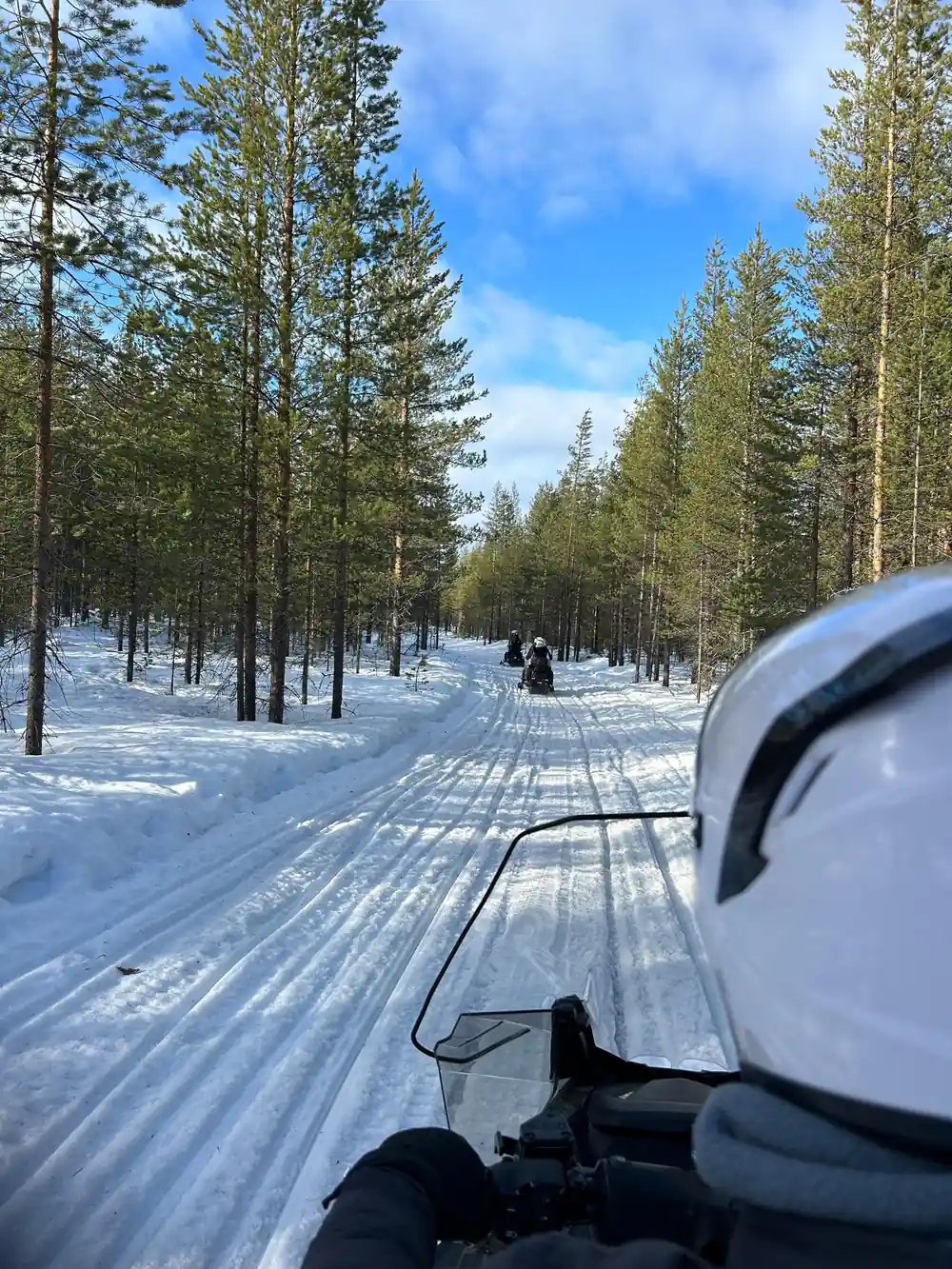
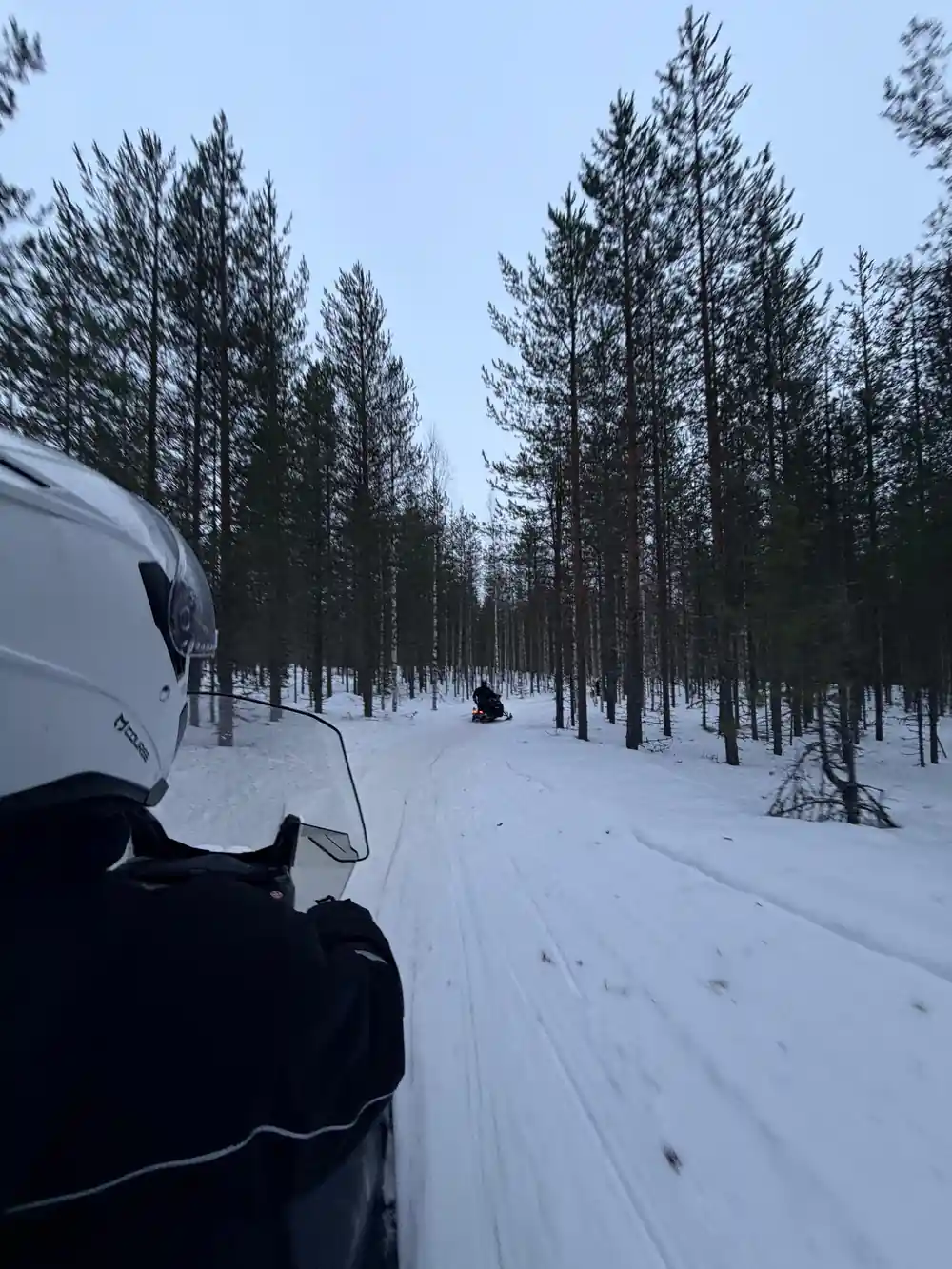
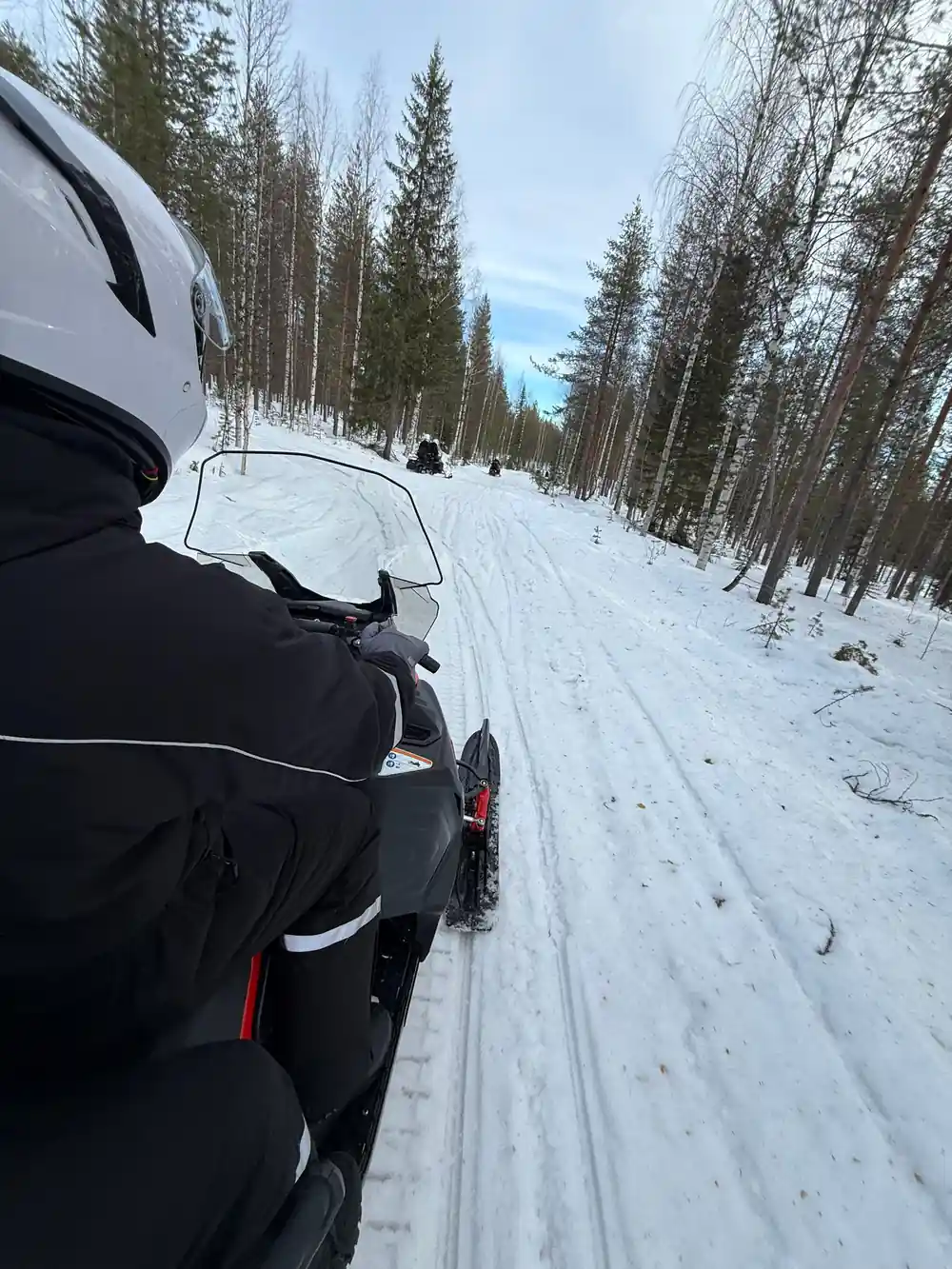
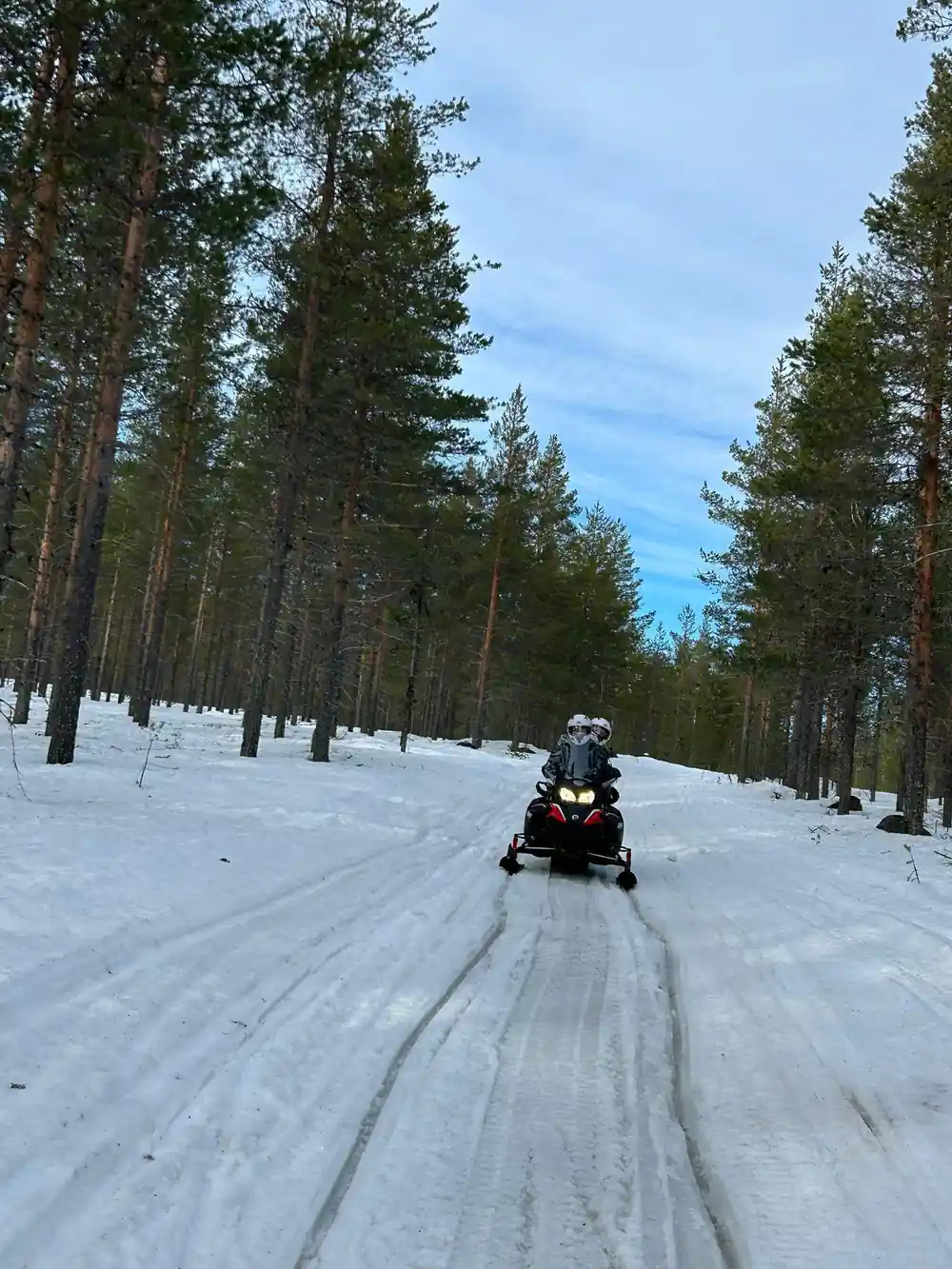
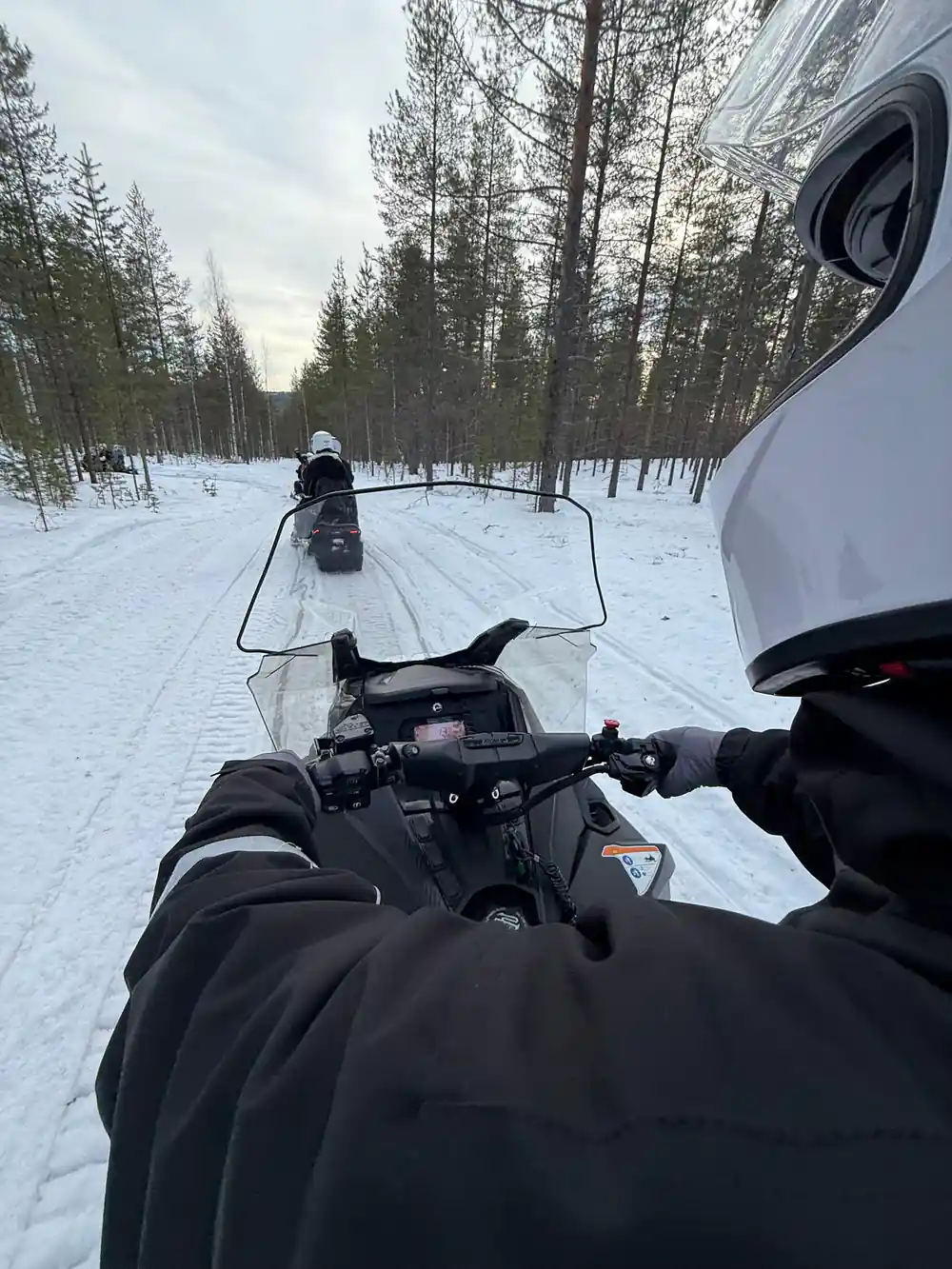
The first thing you notice is the quiet. A snowmobile running at a steady pace through a snow-covered forest is a soft machine: the track hisses, the engine sits low, and cold air carries sound a long way. When the guide switches off and the group stands still, the silence is complete and the sky above is far bigger than it looks from a town street. You ride in a line behind the guide, headlight on the trail, with pines and snow banks sliding past on both sides.
The Northern Lights Snowmobile Hunt with BBQ runs for 3.5 hours and leaves Rovaniemi in the evening, with pickup included and a live guide who speaks English.[1] That is enough time for a proper run out of town, a stop in the dark and a fire before you head back. Dress as though you were going to stand outdoors for the whole evening, because you will spend part of it standing still.
Why leaving town matters for aurora visibility
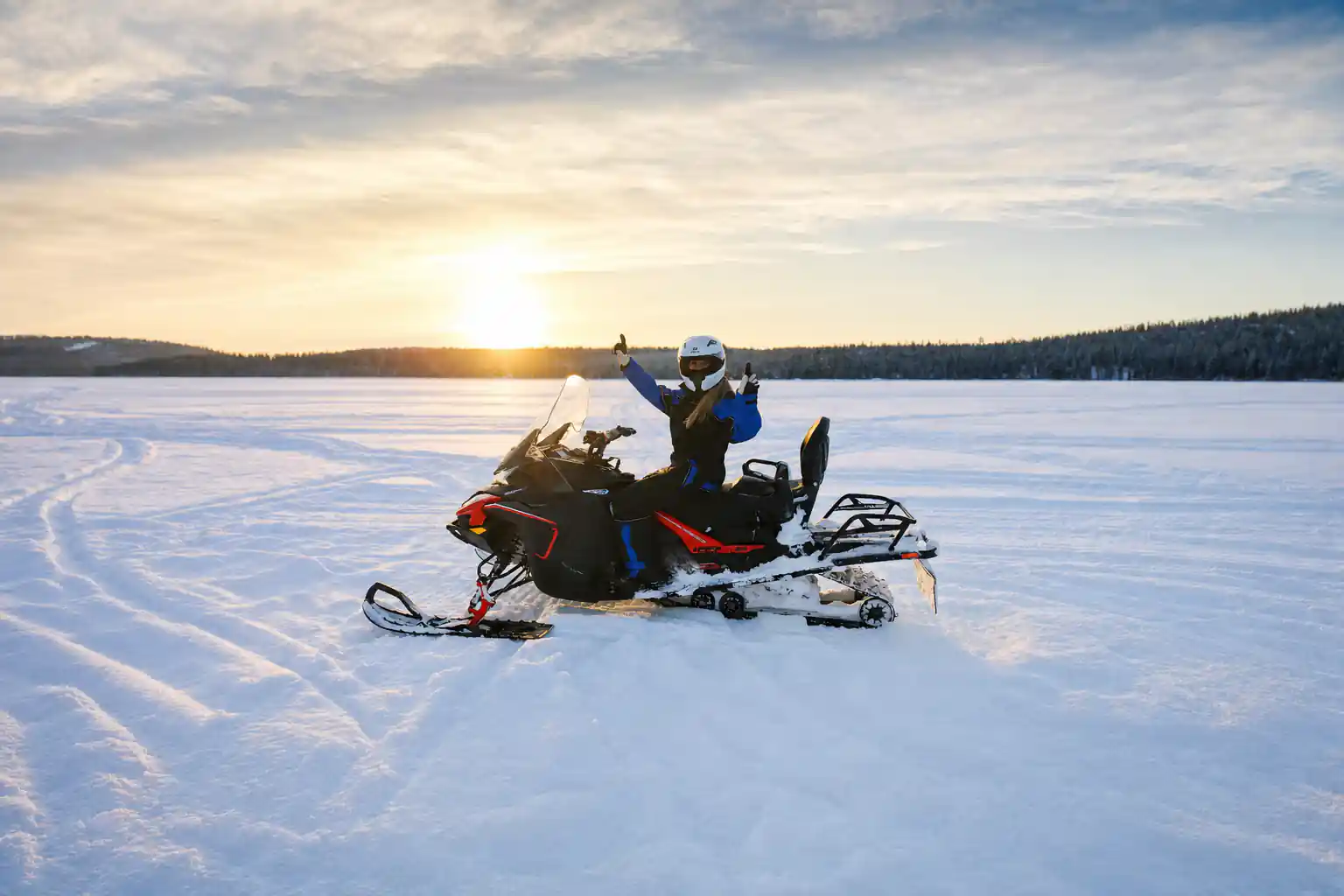
Hunting the aurora from a hotel window rarely works. Street lighting, headlights and lit windows wash out a glow that a camera picks up long before your eyes do. The fix is simple: put distance between yourself and the town, which is what a night snowmobile run does. The trails out of Rovaniemi cross frozen marshes, lakes and forest, and open patches of lake ice make natural viewpoints with nothing between you and the sky.
You are already well north. The Arctic Circle runs through Santa Claus Village, eight kilometres north of Rovaniemi city centre[9], and the trails push further out from there. Over half a million tourists visit Rovaniemi each year, and 65% of them come from abroad[10], so plenty of people are chasing the same dark skies. On a clear night, the difference between a lit street and a dark lake is the difference between seeing a pale arc and seeing nothing at all.
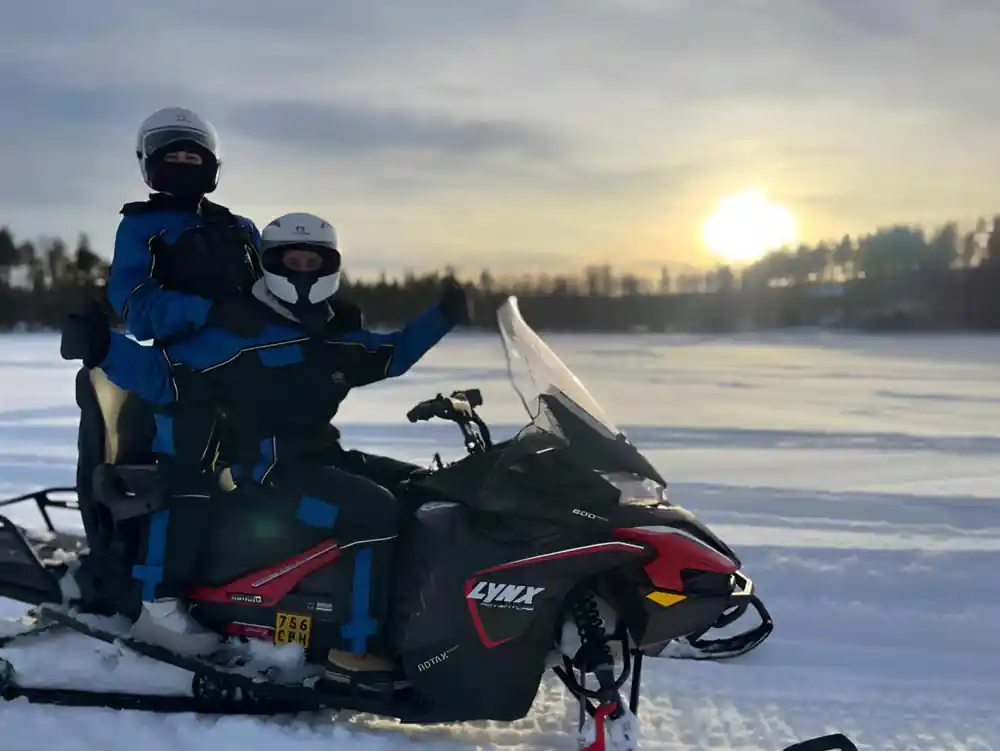
A line of snowmobiles waits on the ice while the group watches the sky
The campfire clearing as a frame for the northern sky
An aurora night is a cold night, so the fire at the halfway point matters: this tour is the Northern Lights Snowmobile Hunt with BBQ.[1] A fire in a snowy clearing does two useful things. It gives you somewhere to sit while your eyes adapt to the dark, which takes longer than most people expect, and it keeps your hands and face warm enough that you are happy to keep looking up instead of retreating to a vehicle.
The clearing frames the view. Around Rovaniemi the forest is a mix of Scots pine, Norway spruce and mountain birch, with birch forming a wind-shaped belt at the tree line[11], and a gap in those trees can give you a clean horizon in several directions at once. Bring a torch with a red setting if you have one, since white light resets your night vision, and keep spare camera batteries in an inside pocket where they stay warm.
Photography on a night like this is mostly about patience. A modern phone can hold a steady shot if you brace it against a tree or a sled, and a camera on a small tripod will beat it easily. Set the lens wide, open the aperture, raise the ISO and try exposures of a few seconds, then adjust. Whatever the pictures look like, the memory of standing in a snowy clearing while the sky moves is the part people talk about afterwards.
The physics of northern lights above Lapland
Auroras begin at the sun. Charged particles stream outwards in the solar wind, and when they meet the Earth's magnetic field they are funnelled towards the polar regions. High in the atmosphere they collide with oxygen and nitrogen, and those collisions release light. The familiar green comes mostly from oxygen, while reds and purples come from thinner layers higher up and from nitrogen. Lapland sits inside the auroral oval, and aurora watching here is a normal winter activity rather than a rare event.
Two things make the light hard to predict. The aurora follows cycles of solar activity, and cloud can hide the whole show on even a strong night. Forecasts and phone apps give you a short-term view, but on the night itself a guide who knows the local trails and weather is worth more than any chart. Rovaniemi has over 200 aurora displays documented per year[4], and a display can appear and fade within minutes, so keep looking up between sips of coffee.
from US$183
The Northern Lights Snowmobile Hunt with BBQ is a 3.5-hour evening ride with pickup included and a live English-speaking guide.[1]
Which hours of the Arctic night favour aurora activity
Darkness is the main requirement, and winter in Rovaniemi delivers it. In Rovaniemi the polar night lasts for 2 days[12], and either side of those days the light is brief and the nights are long. Local midnight is the usual focus, when the sky is at its darkest and the trails are quietest. Arriving rested helps, because a night ride that starts in the evening and ends late is easier to enjoy when you are not already tired.
Cold matters as much as dark. In December, Rovaniemi temperatures average between -4°C and -11°C, and have been known to reach -30°C[3]. Snow lies on the ground in Rovaniemi for seven months, more than half of the year[2], so a snowmobile night ride is possible across a long season rather than a short window. Crack your visor open when the group stops so it does not fog, and keep your phone in an inner pocket.
If you only have one free night in Rovaniemi, aim for the middle of your stay rather than the first or last evening. Travel days are tiring, and a late return before an early flight is no fun. It also leaves you a second chance if the first night turns out cloudy, which is the single most useful thing you can arrange for an aurora trip.
The realistic likelihood of aurora on any single evening
Nobody can promise you a green sky on a chosen date. Cloud, timing and solar activity all shift, and someone who sees a full corona on one night may see nothing on the next. That is the honest position, and it is worth accepting before you book. What you can control is where you are and how you spend the hours: away from town lights, outside rather than inside, and looking up rather than at a screen.
A snowmobile night ride covers ground, which gives you options that a fixed camp does not have. If cloud sits over one lake, the guide can head for another. On the Northern Lights Snowmobile Hunt with BBQ the group is out for 3.5 hours[1], and the riding is part of the evening rather than dead time between viewpoints. Treat any display as a bonus on top of a good night out in the snow.
What to wear and how to book your night ride
Layers beat one thick coat. Start with thermal base layers, add fleece or wool, then a windproof outer shell, and finish with a hat, warm gloves and boots with room for thick socks. Ask the operator what gear is provided when you book, so you know what to pack. Avoid cotton next to your skin, keep a spare pair of gloves in a pocket, and take a buff for your face, since the ride home is often the coldest part of the night.
The Northern Lights Snowmobile Hunt with BBQ starts from US$183 and lasts 3.5 hours, with pickup included; the listing says to check availability for the details.[1] You can reserve now and pay later, and free cancellation is available up to 24 hours in advance for a full refund.[1] If your dates are fixed, book for the night you land rather than the night before you fly home, so one cloudy evening does not decide your whole trip.
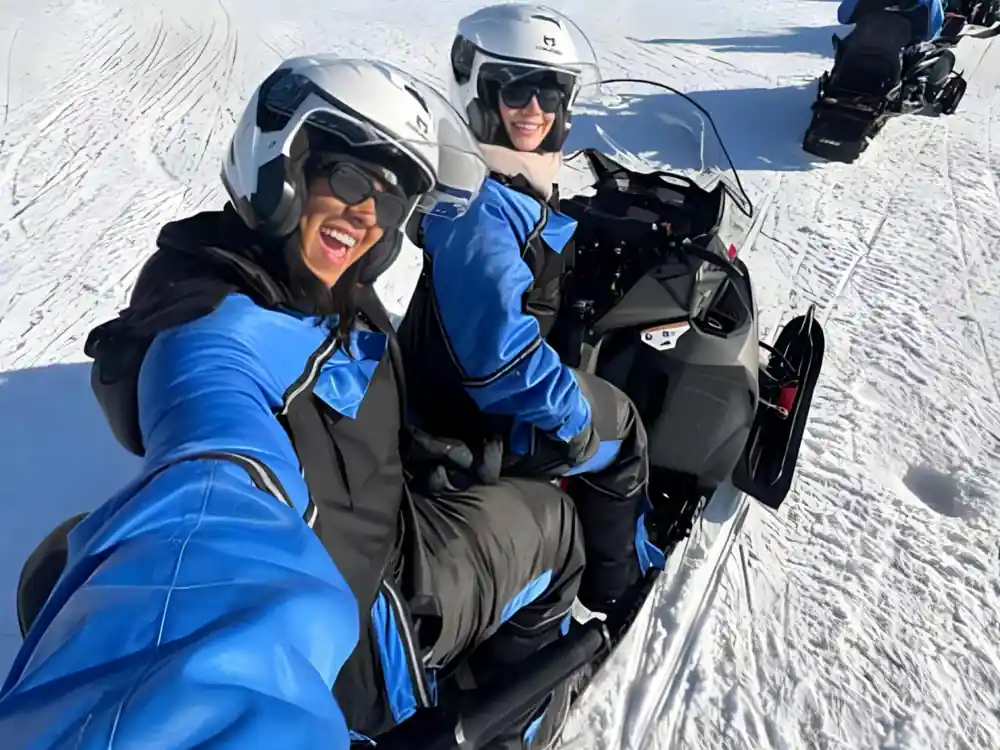
Finally, decide who drives. Two people can share one snowmobile and swap at the halfway stop, which is a comfortable way to travel if one of you would rather watch the sky than the trail. Say so when you book if you would prefer to ride as a passenger, so the guide knows before the group sets off.
Snowmobile speed limits in Finland
Maximum speed limits for snowmobiles in Finland, from Metsähallitus.[13]
What an aurora snowmobile night in Rovaniemi costs
From prices per person in US dollars, taken from these GetYourGuide listings.[1][6][7][14]
When to book a snowmobile aurora night
How the night ride runs
Choose your night
Pick the evening you want and reserve a place; the listing shows starting times when you check availability.[1]
Meet the guide
Pickup is included, and the listing says to check availability for the details of your meeting point.[1]
Kitted out and briefed
You get a safety briefing and a run-through of the controls and hand signals before the line of snowmobiles sets off.
Out along the trails
The group follows the guide along forest and lake trails, stopping in open places to switch off the engines and look up.
Campfire BBQ stop
This is the Northern Lights Snowmobile Hunt with BBQ; the fire stop is the warm, sociable part of the evening.[1]
Back to Rovaniemi
The whole tour runs for 3.5 hours[1], so you are back in town with the rest of the night ahead of you.
Book the Northern Lights Snowmobile Hunt with BBQ
from US$183