The quick version
- The featured safari uses new 2025 snowmobiles and lasts 3 hours.[1]
- Ride in a guided line across snowy forest and frozen lakes, with a live English-speaking guide.[1]
- The highest speed limit on terrain and routes is 60 km/h, and 80 km/h on ice-covered water areas.[2]
- Finnish Lapland has approximately 2,935 km of official snowmobile routes.[3]
- Book from US$137 with reserve now & pay later and free cancellation up to 24 hours in advance.[1]
- Top choice New Snowmobile Safari from US$137 Duration3 hours[1]GuideLive tour guide: English[1]PickupCheck availabilityRating4.71 from 2,278 reviews[1] Check availability
- Snowmobile & Ice Fishing from US$218 Duration5 - 6 hours[4]GuideLive tour guide: English[4]PickupPickup included[4]Rating4.79 from 920 reviews[4] See this tour
- Wilderness Snowmobile Ride from US$119 Duration2 hours[5]GuideLive tour guide: English[5]PickupPickup included[5]Rating4.75 from 783 reviews[5] See this tour
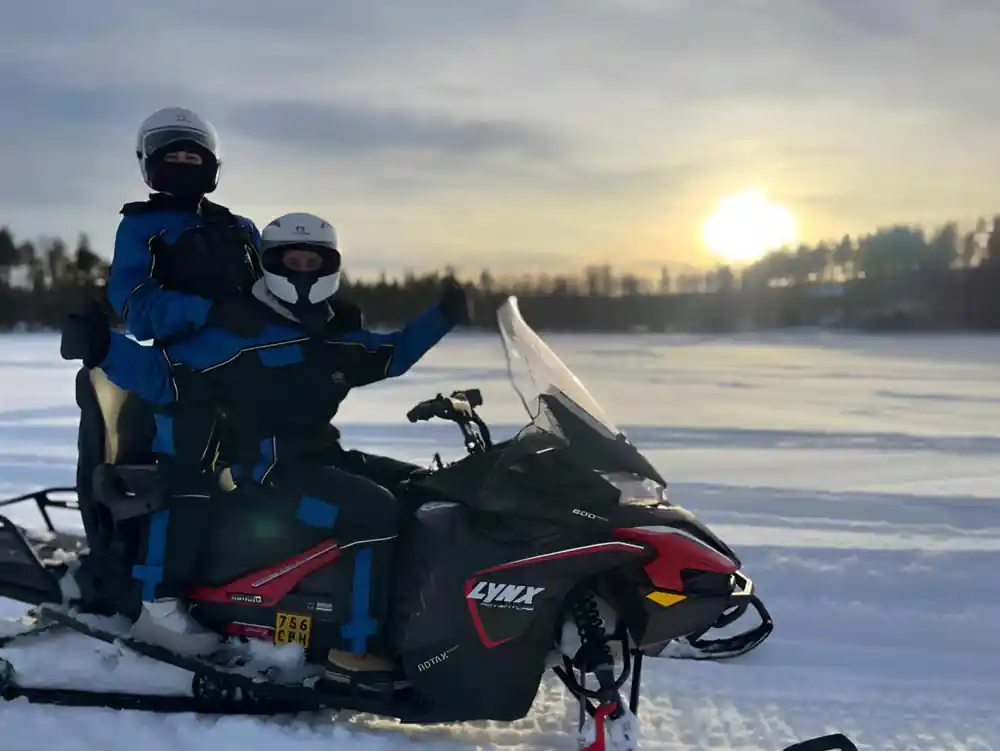
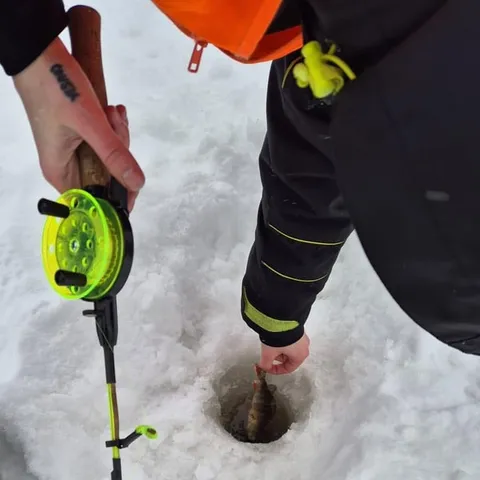
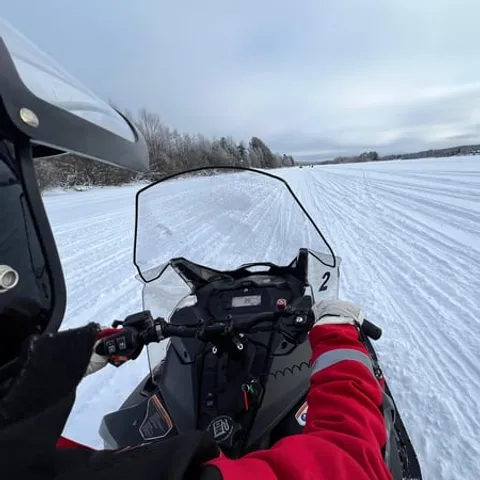
The highest speed limit for snowmobiles in terrain and on routes is 60 km/h. On ice-covered water areas the speed limit is 80 km/h, except on routes on ice-covered water areas, where the limit is 60 km/h.
A sociable Arctic ride with real speed, in the right dose
Know this first
Real speeds on forest and fell trails
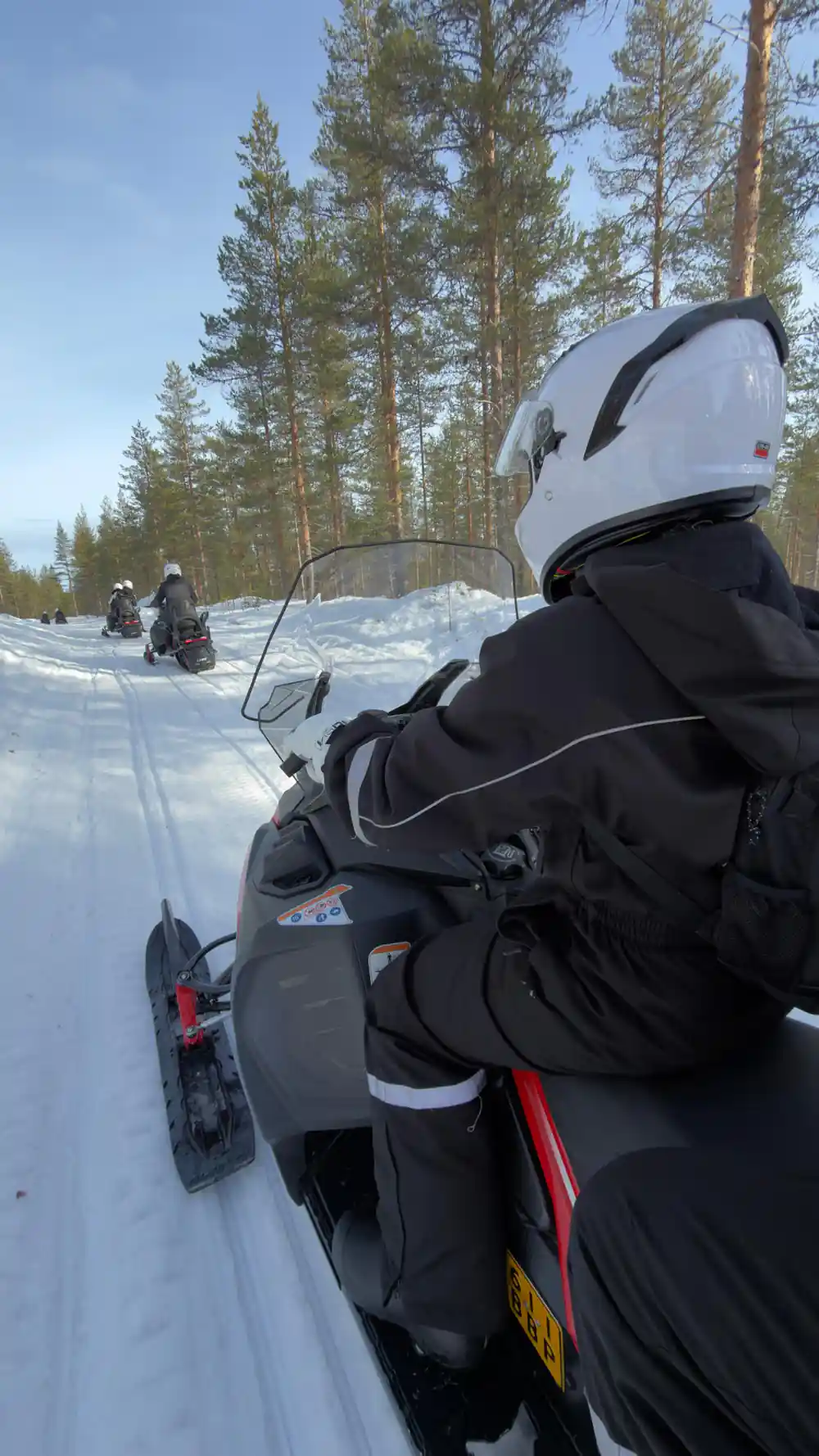
Before you imagine a snowmobile screaming across open country, know the legal picture. In Finland, the highest speed limit for snowmobiles in terrain and on routes is 60 km/h.[2] That applies on packed trails and through the spruce woods that make up much of a Rovaniemi safari. It still feels proper and purposeful, with the machine humming under you and Arctic air streaming past, but it is not a reckless white-knuckle blast. You have enough time to read the trail, choose your line, and feel the skis bite when you turn.
Lapland has approximately 2,935 km of official snowmobile routes.[3] Guides use that network to choose trails that suit the group's confidence, so a first-timer and a more experienced rider can both enjoy the same morning. The forest here is classic Lapland: Scots Pine and Norway Spruce lower down, with Mountain Birch appearing at the tree line.[9] Riding at the legal limit is fast enough to make your cheeks pink and slow enough to notice the shape of the snow on every branch. If you want a more open feel, the guide will often pick a stretch where the trees pull back and the sky opens up.
In practical terms, the pace also helps you plan. You cover enough ground to feel like you have been somewhere, yet you are back in Rovaniemi before the cold starts to bite. That makes a guided safari a good first snowmobile experience: exciting without demanding anything more than the ability to follow instructions.
Why the frozen lake feels dramatically faster
When the convoy rolls out onto a frozen lake, everything changes. The highest speed limit on ice-covered water areas is 80 km/h, except on routes across ice, where the limit is 60 km/h.[2] The higher limit is only part of the story. With fewer trees and fewer landmarks, the lake gives you less to measure yourself against, so the same glide feels quicker, smoother and more open. Your eyes can run to the far shore, and the only sound is the engine and the hiss of snow being thrown behind you.
Frozen lakes are a signature of Arctic riding, and operators only head out when conditions are right. To carry a snowmobile safely, ice thickness must be at least 25 centimetres (10 inches).[7] On the featured safari, the guide picks a route that keeps the group safe while still giving you those moments where the lake opens wide around you. If the weather is calm, the lake can be the most peaceful part of the ride; if the wind is up, it can feel bold and exposed. Either way, it stays in your memory.
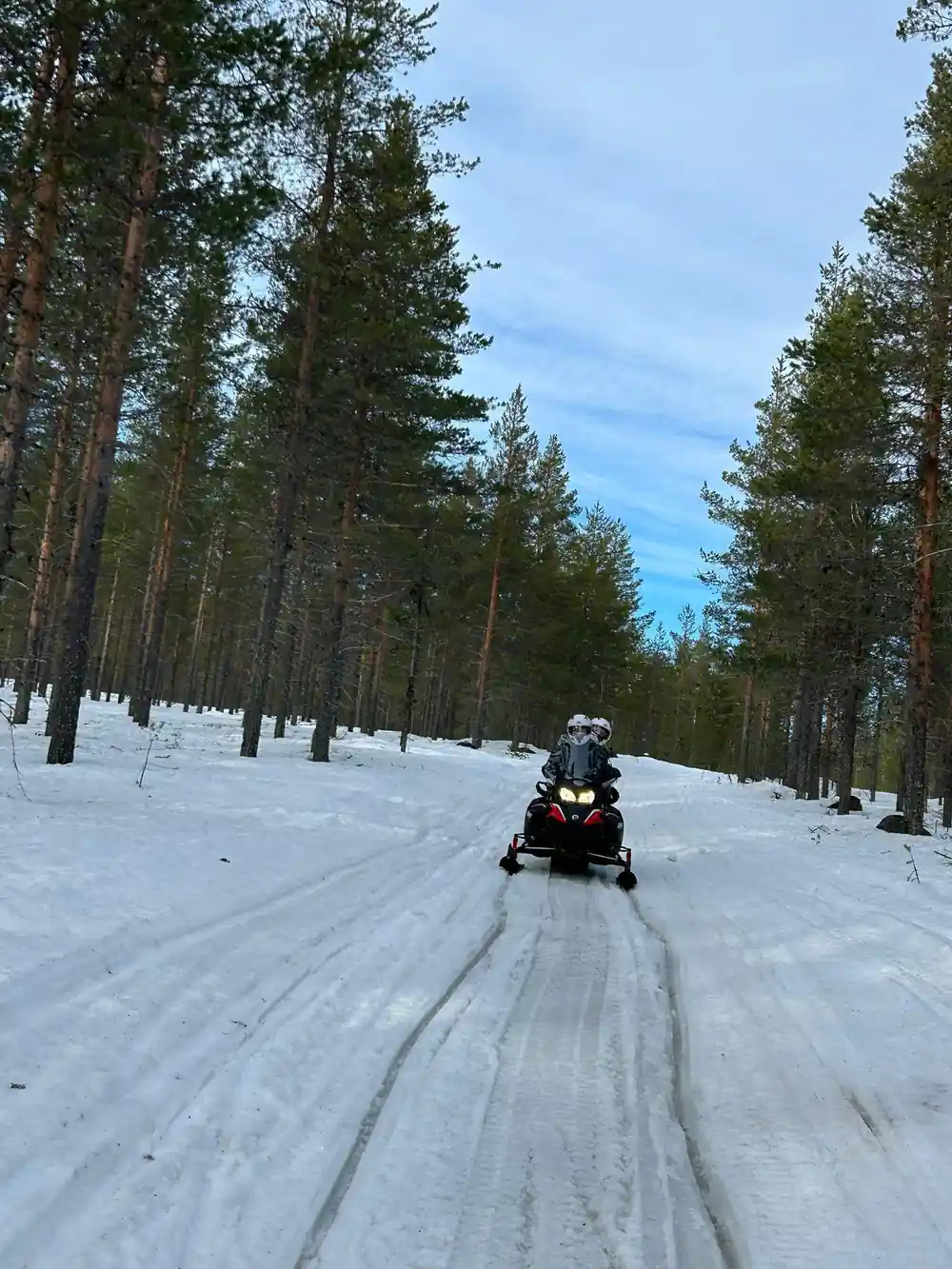
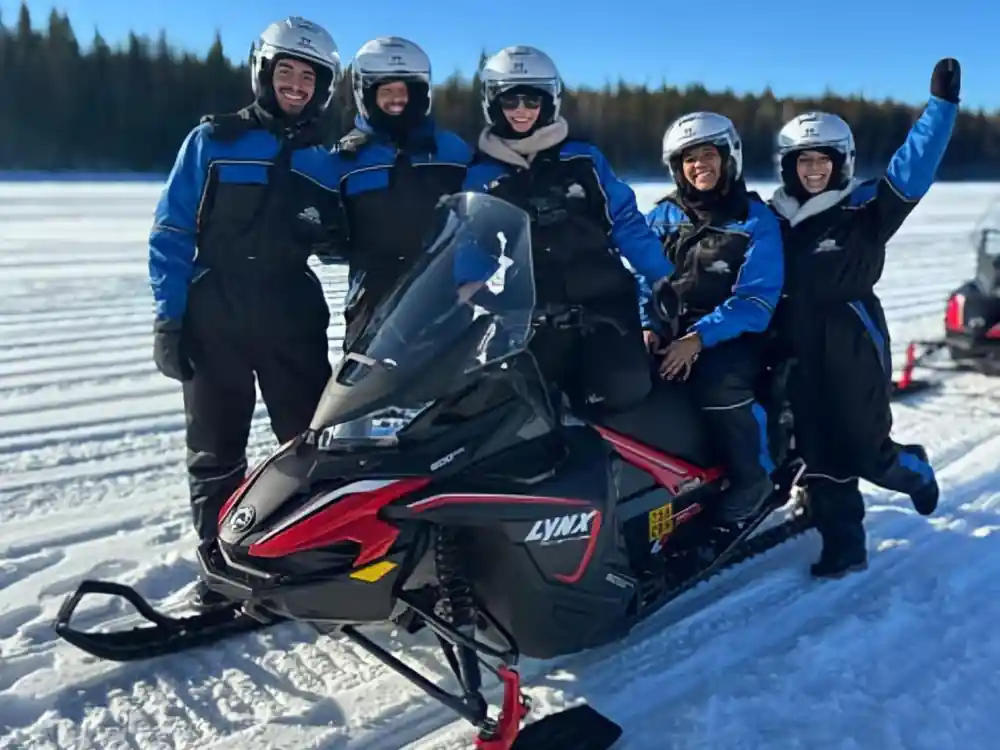
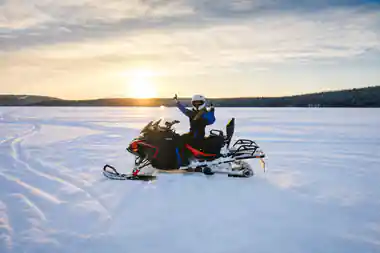
A line of winter riders follows the guide across a frozen lake in the Arctic light.
Single-file convoy riding and why the guide leads
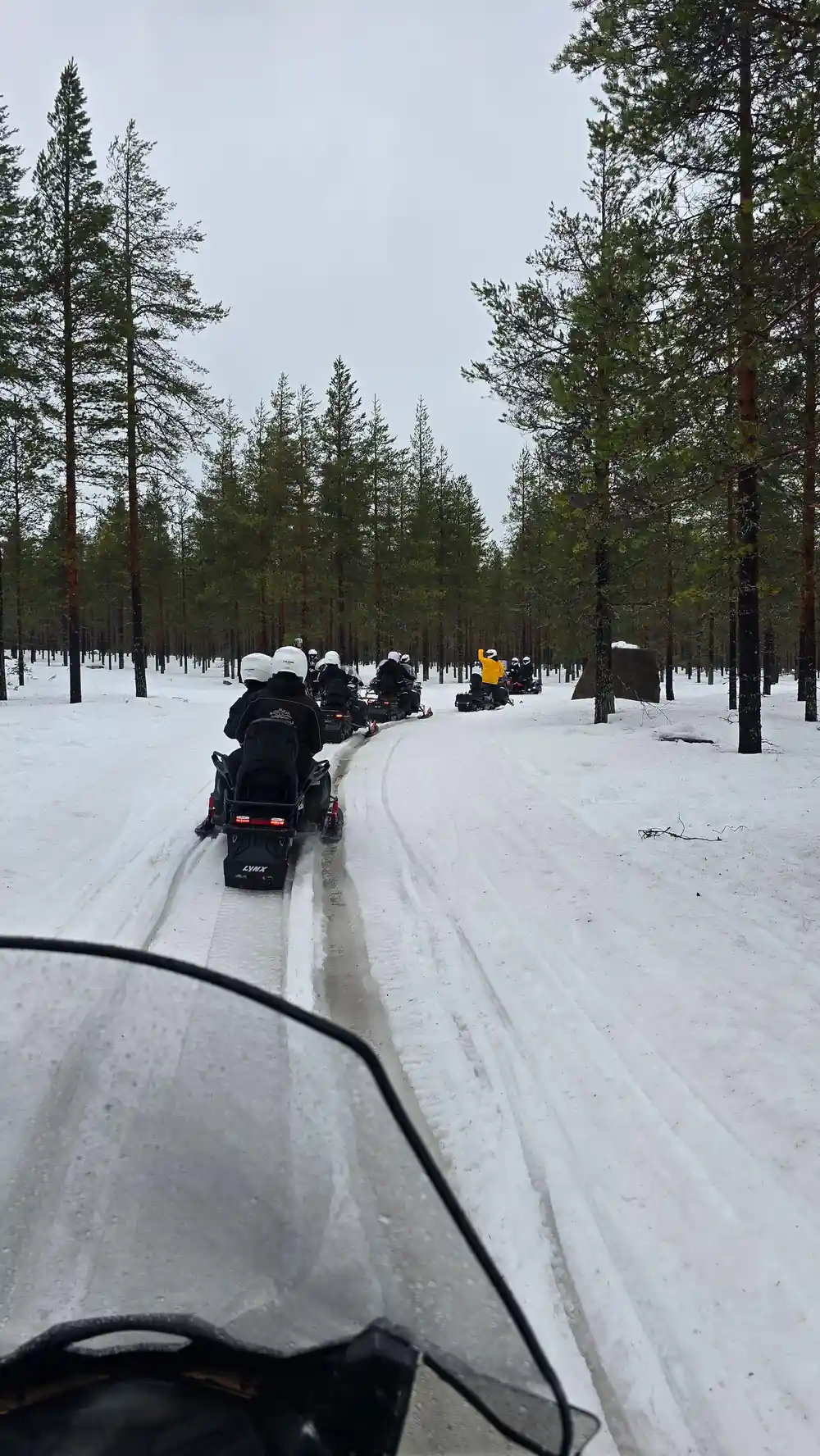
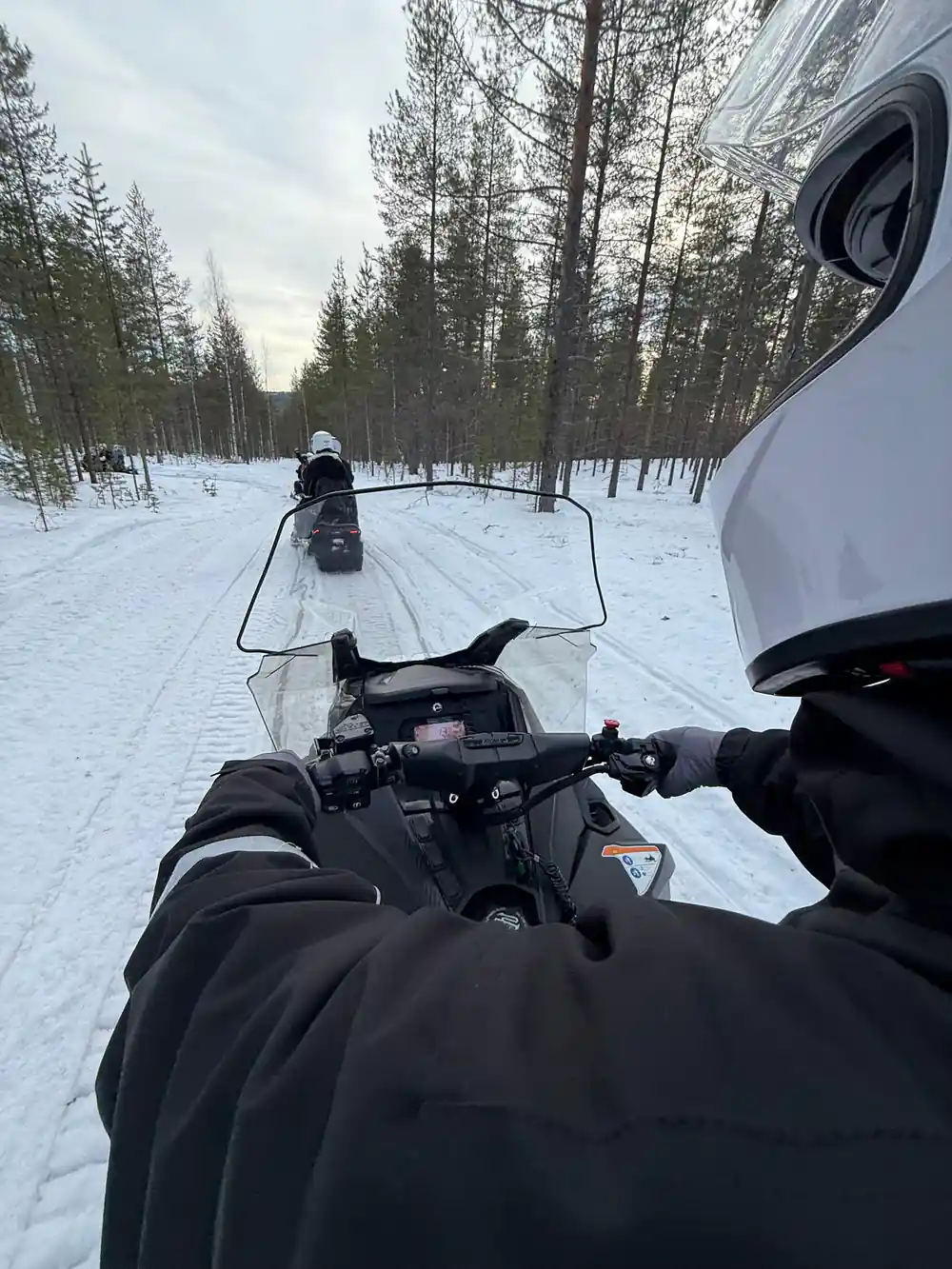
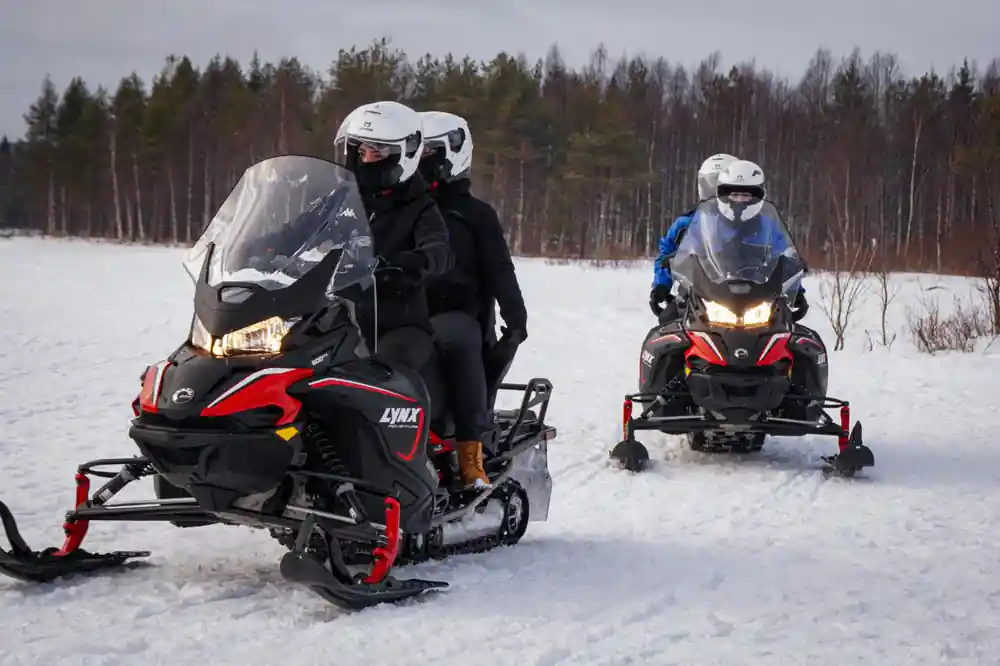
Most Rovaniemi snowmobile experiences run as a convoy: guests line up one behind the other and follow the guide. The featured tour is a 3-hour guided ride with a live English-speaking guide.[1] Keeping the group in single file means the trail stays readable, the guide can watch every rider, and beginners always have a clear track to follow. It also makes the ride feel sociable: you are moving together through the landscape, sharing the same cold air and the same view.
Off-road, snowmobiles may be driven by persons aged 15 or over.[8] The operator may have its own rules on top of that, so check before you book. When you slot into the convoy, keep your front ski in the track of the rider ahead and let the machine settle into the snow. Soon you learn how it responds to your weight and the throttle. The guide leads, and you do not need to think about navigation; your job is simply to stay present and ride smoothly.
Hand signals the guide uses to communicate
On a snowmobile, engine noise and helmets make conversation difficult, so guides use simple hand signals for the key messages: slow down, stop, turn left, turn right. If you see an arm raised, ease off the throttle. If the guide points to the side, prepare to follow onto a different track. The gestures are usually intuitive, and after the first few minutes they become second nature.
Before setting off, ask your guide to run through any signals you are unsure about. The live guide speaks English throughout the tour, so it is easy to clarify.[1] Once you know the signals, the convoy works almost silently. You watch, respond, and enjoy the rhythm of machines moving together through the snow. If you ever lose sight of the guide ahead, slow down and let the gap between you and the next rider grow until you can see again.
Hand signals are not the only way the guide communicates. A throttle blip can mean 'keep moving', and a raised glove can mean 'hold for the group'. The important thing is to stay loose and watchful. Before long you will be reading the trail as naturally as you would read a road.
from US$137
3-hour guided safari with a live English-speaking guide.[1]
Whether you can swap drivers or ride ahead
If two people are travelling together, a common question is whether you can take turns driving. Check availability for the featured safari to confirm what your operator allows.[1] Some smaller tours may offer a chance to swap when the group stops, but this is never something to assume. The more you know before you go, the less time you will spend sorting it out at the safari centre.
Riding ahead is generally not part of a guided group safari. The guide sets the route and keeps the convoy together, and pulling out of line can disturb the track for everyone behind you. If you want a more independent feel, look for a private tour and ask about pace before you book. For most travellers, though, the group rhythm is part of the charm: you are out in the Arctic, but never alone.
What one hour of driving feels like for thrill-seekers
A short safari can still deliver a proper dose of speed and cold air. The easiest way to try snowmobiling in Rovaniemi is a 1-hour safari, priced from US$114.[10] In that hour, you get the essentials: the engine's pulse, the bite of the wind, and snow-covered trees slipping past. It is a good pick if you are short on time or travelling with a cautious first-timer.
The featured tour goes longer, with 3 hours on the trails.[1] That gives you time to leave the immediate city area behind and settle into a deeper, more absorbing rhythm. As the ride goes on, the cold becomes part of the experience rather than a distraction. Thrill-seekers tend to appreciate the long straights and the open views, while first-timers get space to build confidence. By the time you return, you have a real sense of what Arctic travel feels like.
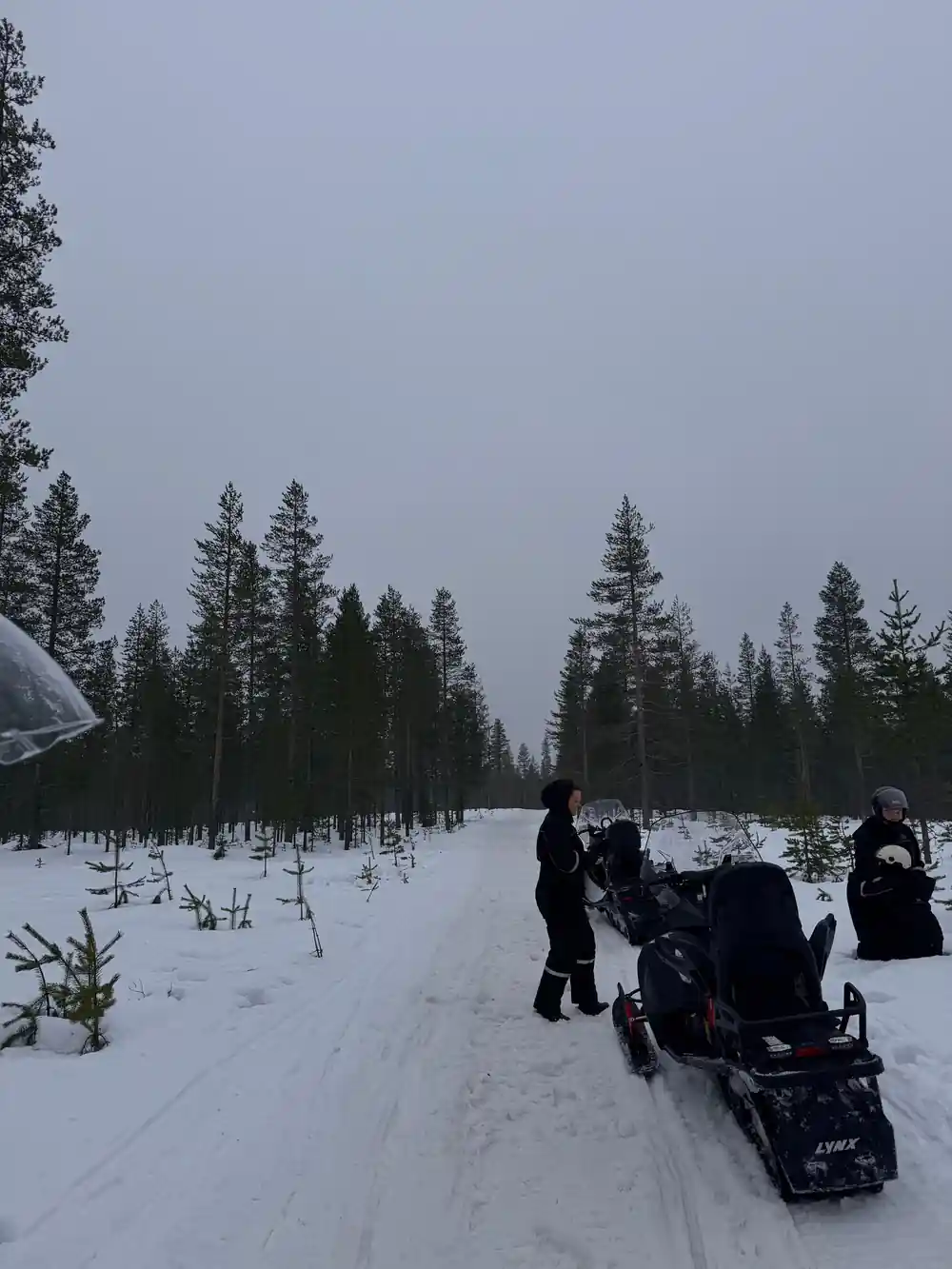
Riding in winter is as much about the pause as the speed. Some safaris stop for a hot drink around a fire, which is where the Arctic really sinks in. The cold air, the warm cup, and the company of your group turn a simple ride into a proper outing.
Making the same hour feel wild or calm
The mood of a snowmobile ride depends on the light, the group and your own state of mind. On a morning safari, the snow can look blue and quiet; at night, darkness makes the same trail feel bigger. Rovaniemi has over 200 aurora displays documented per year[11], so an evening ride carries a little extra possibility. Even if the lights stay hidden, a clear winter night on a snowmobile is a strong memory.
In deepest winter, the polar night in Rovaniemi lasts only 2 days[12], while snow stays on the ground for seven months.[13] The long season means there is plenty of time to catch a day that matches your energy. The Arctic Circle runs through Santa Claus Village, located eight kilometres north of the city centre[14], which is a handy reference if you are planning rides and other stops. Whether you want a gentle cruise or a quicker outing, the guide sets the pace, and you choose the safari length and start time.
How long do Rovaniemi snowmobile safaris last?
Durations in hours come from these GetYourGuide listings.[1][5][10][15][16]
Compare adult from-prices
Adult from-prices in USD come from these GetYourGuide listings.[1][4][5] Child rates are not stated.
When to book your Rovaniemi snowmobile ride
How to plan your ride
Check who can drive
Off-road, snowmobiles may be driven by persons aged 15 or over.[8]
Dress for the cold
For safety on frozen lakes, ice thickness must be at least 25 centimetres (10 inches) before a snowmobile crosses.[7]
Meet the convoy
The featured safari is a 3-hour guided ride with a live English-speaking guide.[1]
Follow the signals
Follow the guide's hand signals and keep a steady distance in the single-file convoy.
Know the speeds
On terrain and routes, the highest speed is 60 km/h; on ice-covered water areas it is 80 km/h.[2]
Book your safari
The ride costs from US$137 and is available with reserve now & pay later.[1]
Choose your Rovaniemi snowmobile ride and feel the Arctic speed
from US$137Reserve now & pay later