The quick version
- Guided safaris start with a briefing and a practice loop, and off-road snowmobiles in Finland may be driven by persons aged 15 or over.[1]
- Your right thumb works the throttle and your left hand the brake. Small, smooth inputs keep the machine settled underneath you.
- Slide your weight to the inside of a corner, keep both feet on the boards, and look through the turn rather than at the snow just in front of the skis.
- If you dig in, stop spinning the track. Pack snow under it, lift the rear, and use gentle throttle while somebody pushes from behind.
- Safaris range from an easy one hour ride[2] to a full eight hour day[3]. Choose the length that matches your stamina and your tolerance for cold.
- Top choice New 2025 Snowmobiles Safari from US$137 Duration3 hours[4]Rating4.71 from 2,278 reviews[4]GuideLive tour guide: English[4]CancellationFree cancellation up to 24 hours[4] Check availability
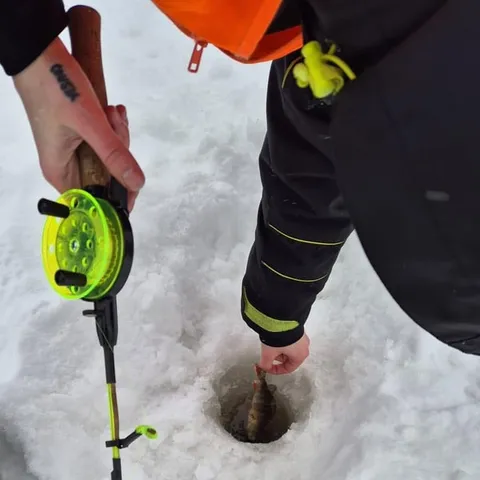
- Snowmobile & Ice Fishing from US$218 Duration5 - 6 hours[5]Rating4.79 from 920 reviews[5]GuideLive tour guide: English[5]CancellationFree cancellation up to 24 hours[5] See this tour
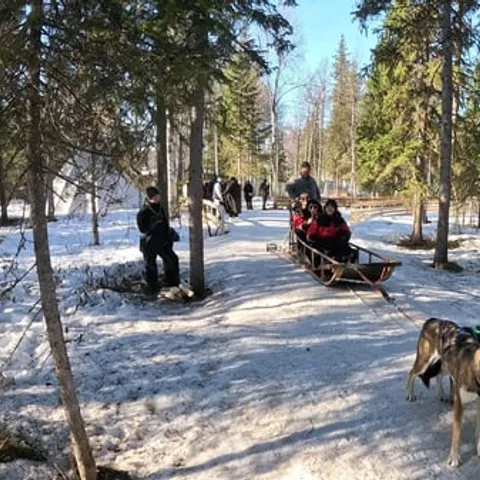
- Husky & Reindeer Ride from US$228 Duration6 hours[6]Rating4.61 from 1,288 reviews[6]GuideLive tour guide: English[6]CancellationFree cancellation up to 24 hours[6] See this tour
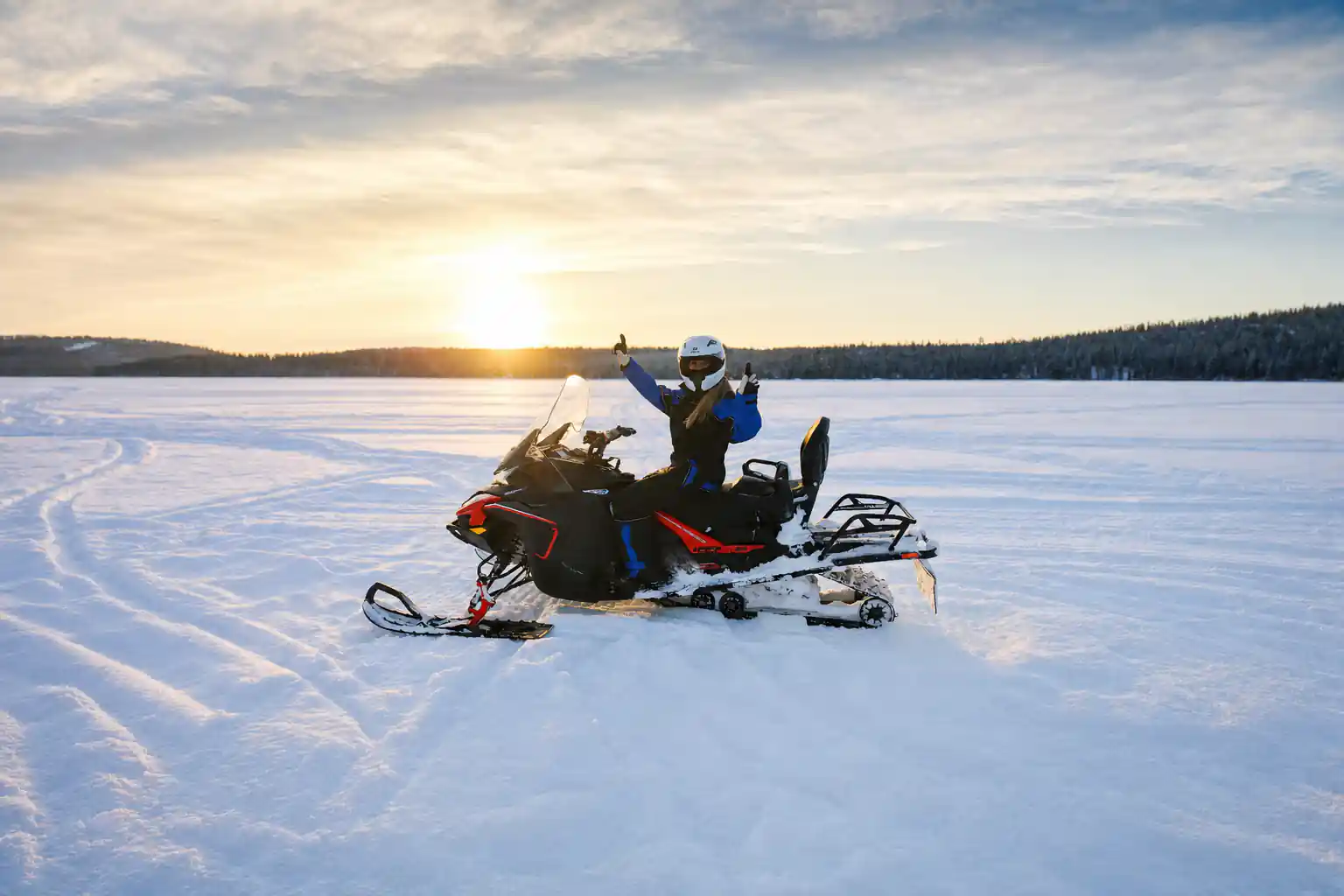
Off-road, snowmobiles may be driven by persons aged 15 or over.
Who this ride suits
Know this first
On the trail
- Ride single file and keep a steady gap to the machine ahead of you
- Tell the guide about back, shoulder or wrist problems before you set off
- Low winter light means clean goggles or a clear visor make a big difference
- Snow lies on the ground for seven months in Rovaniemi[8]
Do you need previous snowmobile experience?
Almost nobody who climbs onto a snowmobile in Rovaniemi has done it before. The guide talks you through the machine, watches you pull away, and then leads a slow loop so you can feel how it steers before the group heads into the trees. Off-road, snowmobiles in Finland may be driven by persons aged 15 or over.[1] If you can ride a bicycle and follow instructions, you can do this.
What matters far more than experience is attention. Stay in the tracks of the machine in front, keep a sensible gap, and look ahead rather than down at your own skis. The guides who run these safaris do the same job most days of the winter and can read a nervous rider at a glance. Say so if you are nervous. They will adjust the pace and the route.
Pick a tour whose description matches your appetite. A three hour Arctic safari with a live English speaking guide starts from US$137 per person, and cancellation is free up to 24 hours in advance.[4] Shorter rides exist for anyone who wants a taster, and long expeditions suit riders who already know they love it.
How the throttle and brake actually work
On a modern touring snowmobile the controls sit under your thumbs and fingers rather than at your feet. The throttle is a lever on the right handlebar, worked by your thumb, and the brake is a lever on the left, worked by your fingers. Squeeze gently. A cold machine with a stiff track can lurch forward the first time, so give it small inputs and let the snowmobile catch up with you.
The machine steers with skis at the front and a track at the back, and the track does the pushing as well as the gripping. That means the throttle is not only for going faster, it is part of how you turn. A little power through a corner keeps the rear end settled, while coasting with the throttle fully closed makes the sled feel heavy and vague.
One habit saves a lot of trouble: release the throttle before you brake, and brake before the corner rather than in it. Squeezing the brake halfway round locks the track and the machine runs straight on, which is the last thing you want with trunks on either side. On a guided ride you also have the machine ahead as a speed reference, so you never have to guess what pace is appropriate.
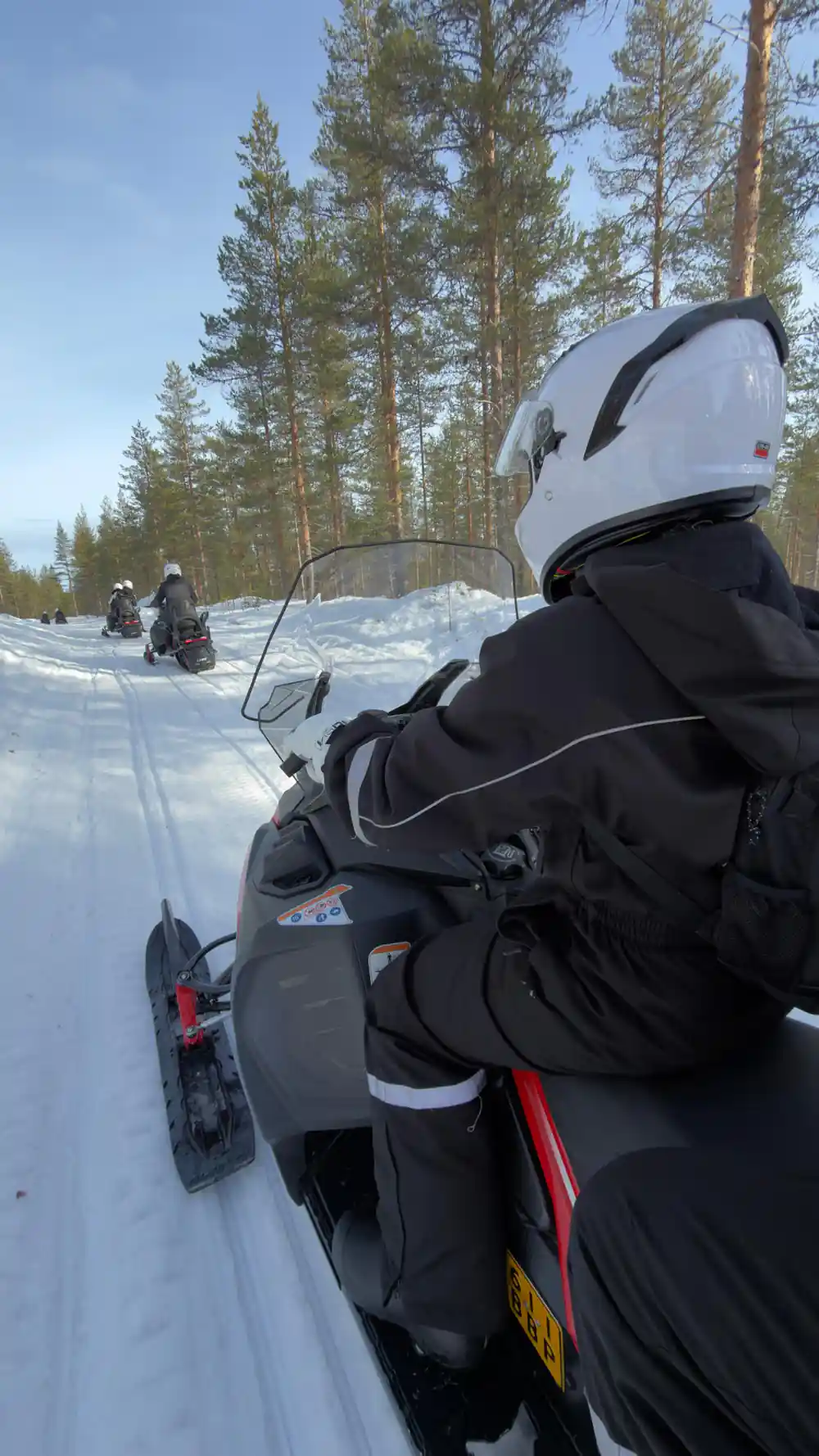
Snowmobiles lined up on a frozen lake in low winter sun.
Leaning and body position through corners
Snowmobiles lean the way a motorcycle does only in films. In practice you steer with the handlebar and help the machine by shifting your weight. Before a corner, slide your backside to the inside of the turn, keep both feet planted on the running boards and press your outside knee against the seat. Your shoulders stay over the centre of the machine.
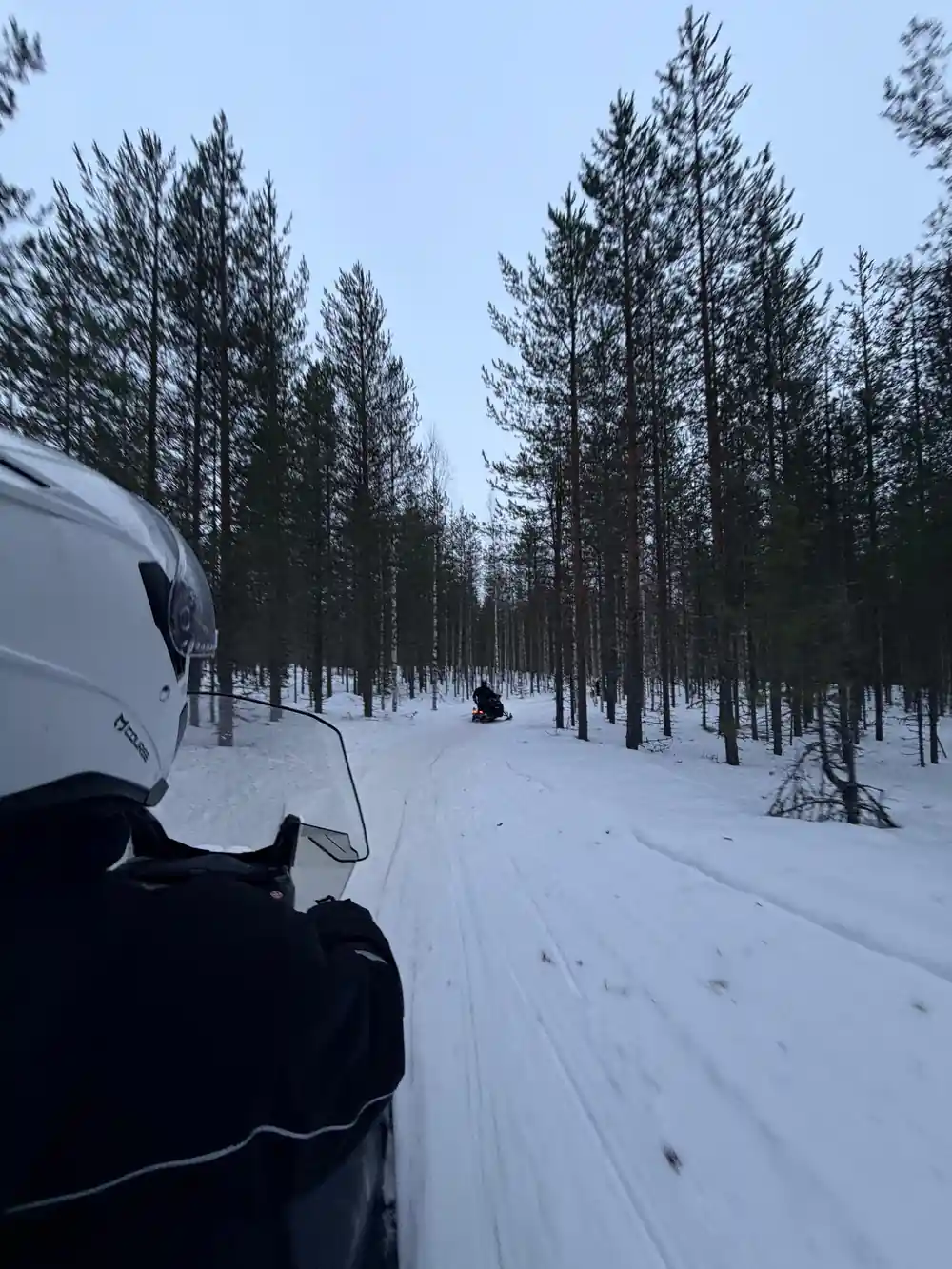
Look through the corner rather than at the snow directly in front of the skis. This is the single habit that separates people who wobble from people who look composed by the end of the ride. When the trail opens onto a frozen lake, resist the urge to straighten up and relax completely. Keep a light grip and be ready to steer if the surface changes under you.
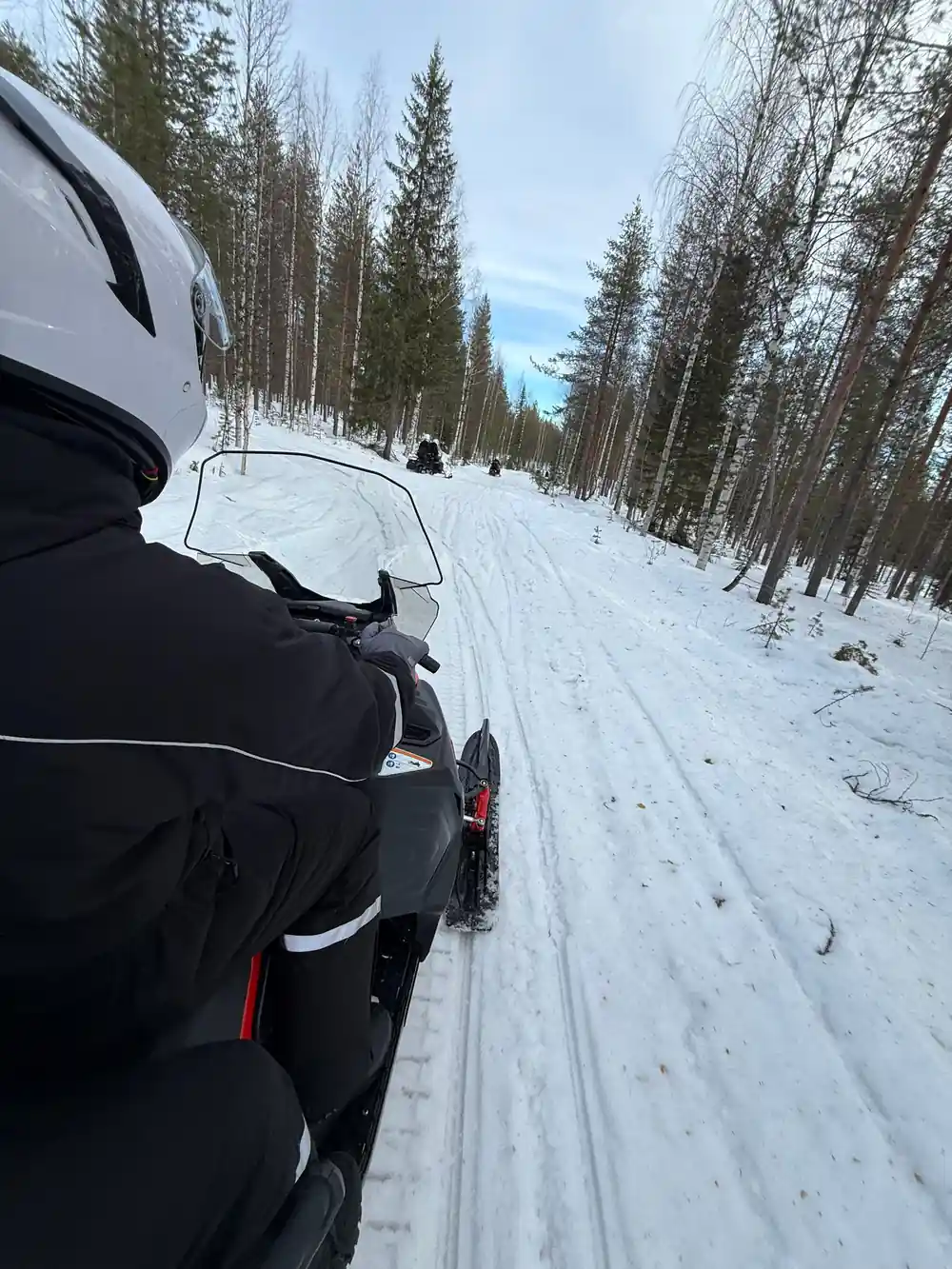
A passenger can help or hinder. Riding pillion, lean with the driver rather than against them, hold on with both hands and keep your feet on the boards. If you are driving with someone behind you, tell them before each turn what you are about to do. On a guided safari you ride in single file, so the person behind is following your line rather than choosing their own.
What to do if the machine gets stuck
You will probably get stuck at least once, usually in soft snow just off the packed trail. The instinct is to squeeze the throttle until something happens. Do not. Spinning the track digs the machine deeper and sprays snow over everyone nearby. Stop, look at where the belly of the sled is sitting, and work out which way it needs to move.
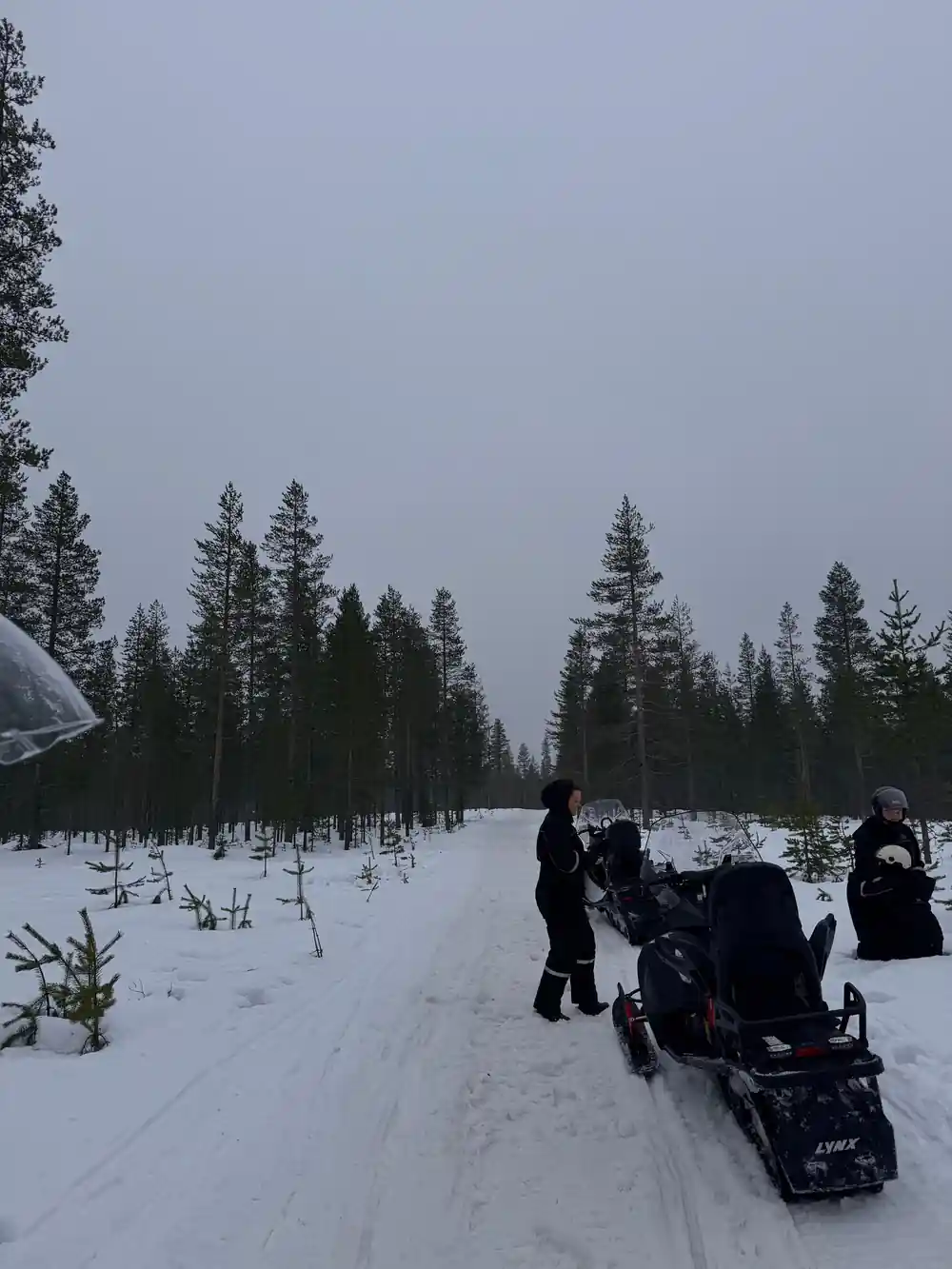
The usual fix takes two people. One lifts and rocks the rear of the machine while the other packs snow under the track to give it something to grip. Then the driver squeezes the throttle gently while you push. On firm, cold snow this is a quick job. In deep powder it is slower, and guides often simply pull the sled free by hand.
Trails cross both forest and lake ice, and the guides know where the surface is thick enough to take a machine. The safety figure worth knowing is that ice must be at least 25 centimetres (10 inches) thick to carry a snowmobile safely.[9] If you ever find yourself off the marked trail and unsure of what is beneath you, turn back and follow the guide's tracks.
from US$137
Three hours on new 2025 machines with a live English guide, rated 4.71 from 2,278 reviews, from US$137.[4]
Physical stamina over one hour of driving
Driving a snowmobile is not athletic, but it is more physical than it looks. The vibration travels up your arms, your thumb tires of holding the throttle, and your shoulders work every time you steer. Add wind chill and cold hands, and an hour in the saddle feels longer than an hour on a chairlift.
Rovaniemi in December averages between -4°C and -11°C, and temperatures have been known to reach -30°C.[7] That is the argument for layers rather than one thick coat: a thermal base layer, a fleece or wool mid layer, a windproof outer shell, and the overalls many operators hand out on top. Keep your phone in an inner pocket where the battery stays warm.
Tour lengths vary a lot. An easy snowmobile safari can last one hour, while a full day tour in Rovaniemi runs eight hours.[2][3] For a first time, a shorter safari is usually plenty: long enough to feel the machine, short enough that cold hands never become the memory of the day. Hot drinks and a warm fire at the halfway point do more for morale than any technique.
Realistic speed on forest and tundra trails
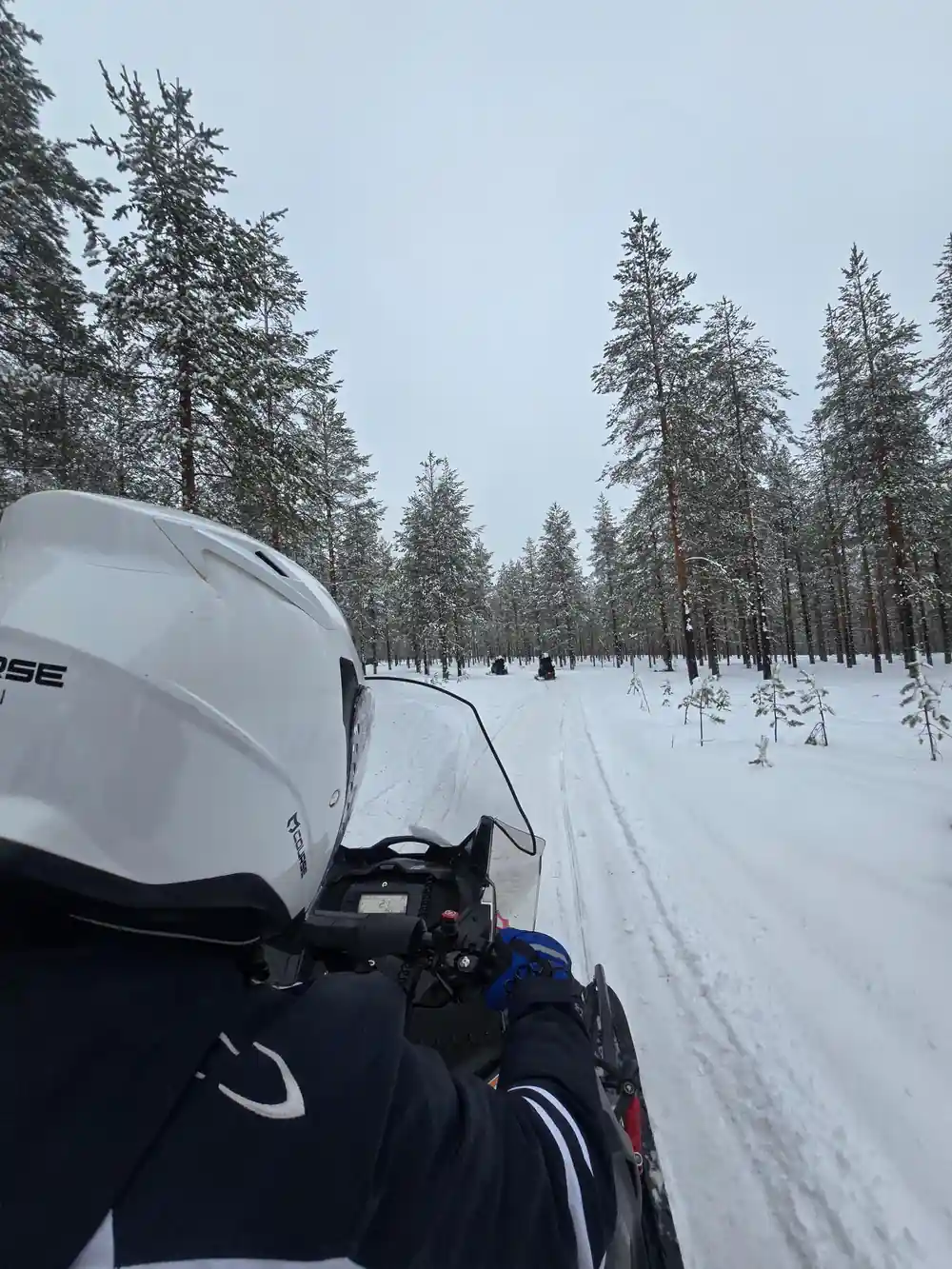
Forget the numbers on the brochure. On a forest trail you are rarely going fast, because the track twists between spruce trunks and the rider in front sets the rhythm. Speed limits exist for good reason: in terrain and on routes the ceiling is 60 km/h, and on ice covered water areas it rises to 80 km/h, except on routes on ice covered water where it stays at 60 km/h.[10]
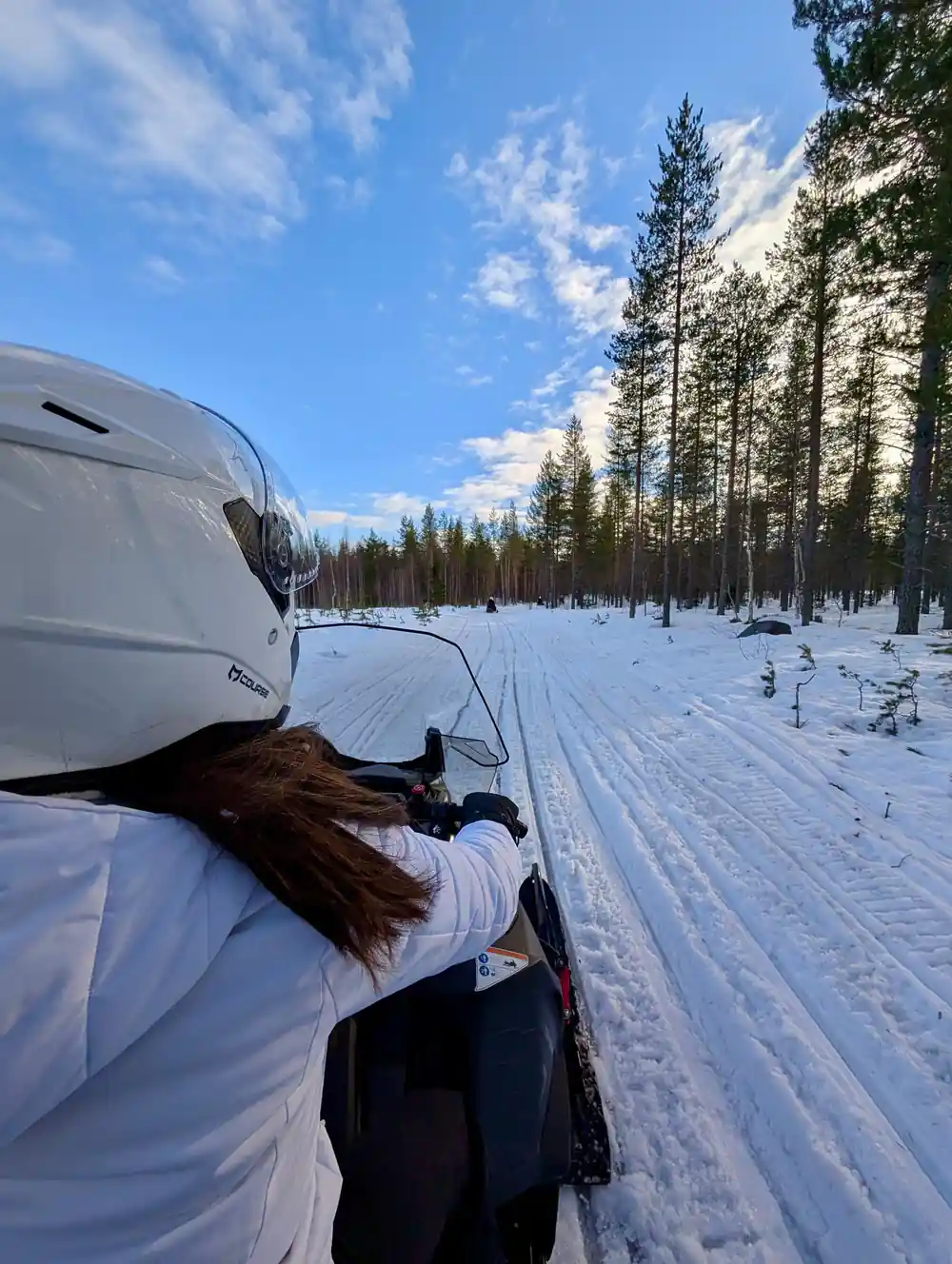
The landscape slows you down in the best way. Lapland's boreal forest gradually gives way to treeless fells known as tunturi, with mountain birch forming a wind shaped belt at the tree line and stands of Scots pine and Norway spruce below in sheltered, moist sites.[11] Riding out of the forest into open fell is the moment most people remember: the trees fall away, the horizon opens, and the snow goes further than you can see.
There is plenty of trail to work with. Lapland has approximately 2,935 km of official snowmobile routes, and guided safaris use them, with the guide handling the navigation.[12] If you want a longer day, a five to six hour ice fishing safari with lunch starts from US$218.[5] For a snapshot, a guided wilderness ride lasts two hours from US$119.[13]
Nervous riders and the passenger option
Plenty of people book a snowmobile safari knowing they would rather not drive one. Snowmobiles are built with a driver at the front and a passenger seat behind, and swapping places partway round is worth asking about when you book. Tell your guide at the start. They would far rather put an anxious rider on the back than watch someone grip the bars white knuckled for hours.
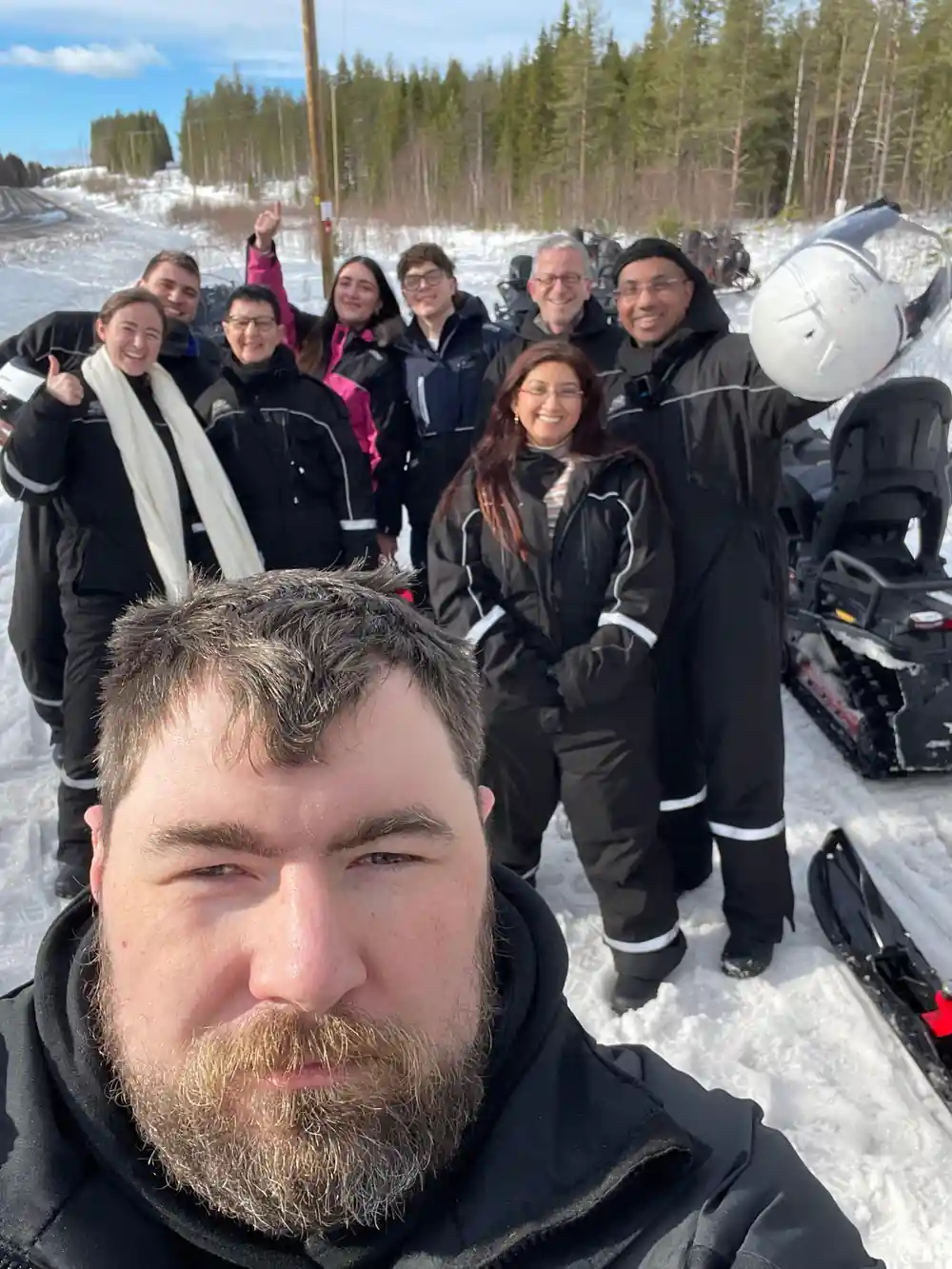
Small groups make a real difference for anyone who is unsure. Some Rovaniemi safaris are limited to eight participants, which keeps the line short and the guide close.[13] Others run as private groups. If your worry is holding other people up, a small group listing removes that pressure almost entirely.
It is worth knowing how popular these rides are. Rovaniemi welcomes over half a million tourists each year, and 65% of them come from abroad.[14] The Arctic safari on new 2025 snowmobiles carries a 4.71 rating from 2,278 reviews, with guide scores of 4.9 and value for money at 4.6.[4] A first snowmobile ride does not have to be a leap of faith.
Snowmobile speed limits in Finland
Every value is a maximum snowmobile speed limit in Finland.[10]
Compare from prices for a first ride
From prices per person on GetYourGuide listings.[2][4][5][13]
When to book your first ride
First ride, step by step
Get kitted out
Overalls, boots, gloves and a helmet are handed out at the start, so arrive in warm, thin layers rather than one bulky coat.
Learn the controls
The guide shows you the thumb throttle, the hand brake and the kill switch, then watches your first few metres on flat snow.
Follow the guide's line
Ride single file, keep a gap, and copy the tracks ahead instead of picking your own route between the trees.
Relax your grip
Tense arms make every bump worse. Hold the bars lightly, breathe out, and let the machine move underneath you.
Swap seats at the break
If you booked as a pair, trade places when the group stops so both of you get time on the throttle.
Your first snowmobile ride starts on a frozen lake
from US$137Reserve now & pay later