The quick version
- A 3-hour safari on 2025 snowmobiles asks for a good grip and a stable core more than serious fitness. The pace is controlled and the views are wide.[1]
- Vibration from the machine can annoy a sensitive spine. If you already know that bumps bother you, ask about a shorter or gentler ride before booking.
- Vibration and cold deserve a careful conversation if you are pregnant. Check with your doctor and the operator, and ask about passenger riding before you book.
- The legal minimum age for off-road snowmobiling in Finland is 15[2]. Older riders enjoy this safari too; comfort is about balance and mobility more than age.
- December temperatures average -4°C to -11°C and have reached -30°C[3]. If you have asthma or a heart condition, take medical advice and dress in layers.
- Top choice 2025 Arctic Safari from US$137 Duration3 hours[1]GuideLive guide in English[1]CancellationFree up to 24 hours before[1] Check availability
- Guided Wilderness Ride from US$119 Duration2 hours[4]GuideLive guide in English[4]CancellationFree up to 24 hours before[4] See this tour
- Ice Fishing with Lunch from US$218 Duration5 - 6 hours[5]GuideLive guide in English[5]CancellationFree up to 24 hours before[5] See this tour
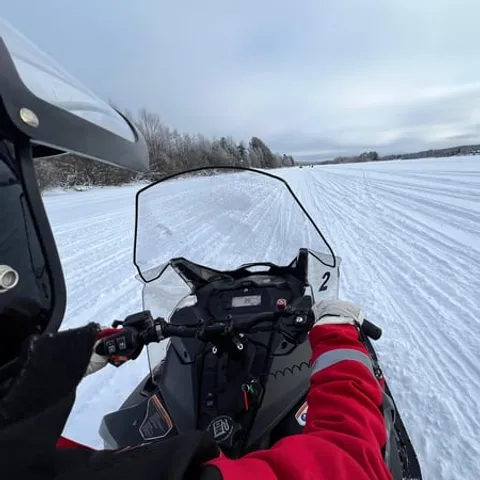
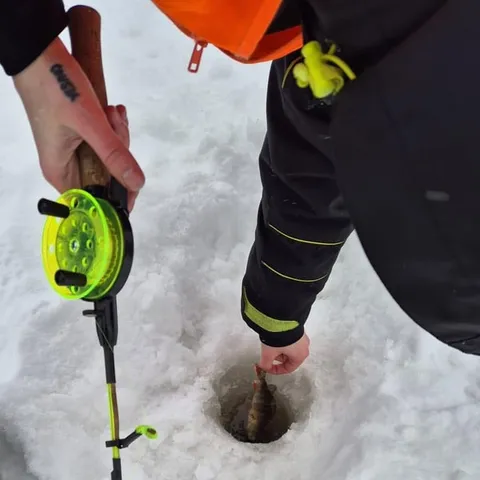
Off-road, snowmobiles may be driven by persons aged 15 or over.
A balanced ride for most active travellers
Know this first
Upper body and core strength needed
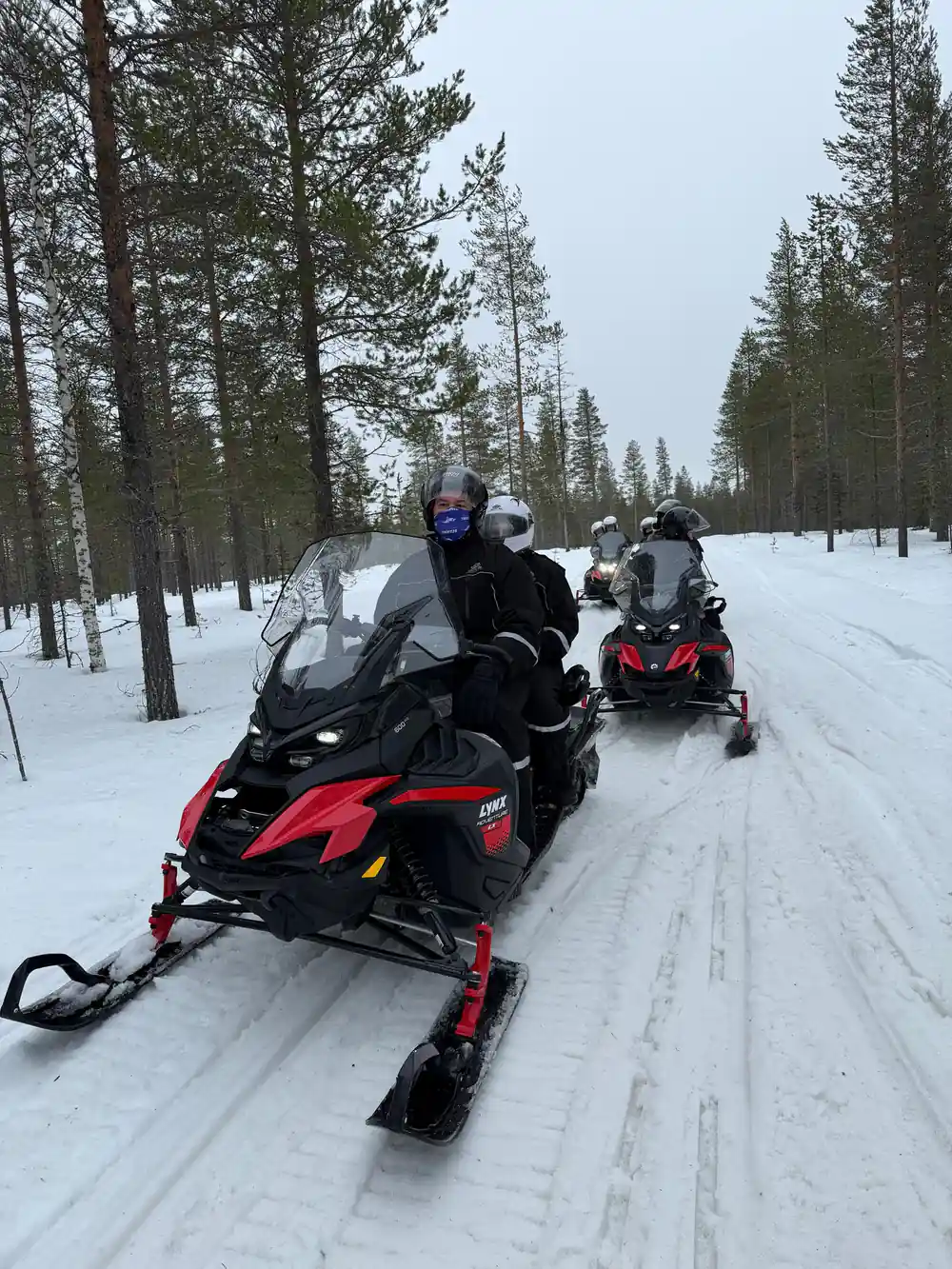
A snowmobile safari is not a passive coach tour. You sit on a machine that moves under you, and for three hours you steer, balance and absorb the small shocks of the trail[1]. The new machines used on this Arctic Safari are smooth, but they still ask you to hold on. Your forearms, shoulders and hands do most of the work, and your core keeps you centred as the sled leans into turns.
The good news is that you do not need heavy gym fitness. Finland limits snowmobile speeds in terrain and on routes to 60 km/h, and on ice-covered water areas the limit is 80 km/h, except on routes on ice-covered water areas, where the limit is 60 km/h[6]. That keeps the experience manageable. Before the ride, it helps to be able to push a heavy door, stand with knees slightly bent and hold your arms out for a short stretch of time. Those simple actions are a fair test of what snowmobiling asks.
A useful way to prepare at home is to hold a light weight at shoulder height briefly, then do some slow squats with your arms out. You are recreating the basic riding position. The aim is not strength training; it is simply to let your body know what the ride will feel like. This is also a good moment to stretch your wrists and fingers, because the bar asks more of your grip than you expect.
Why vibration is risky for back problems
A snowmobile transmits a low hum through the seat, handlebar and footrests. On a smooth track, that vibration is gentle. Over uneven snow, it becomes a repeated jolt. For someone with a healthy back, this is part of the fun. For a rider with a history of back pain, a herniated disc, or neck problems, it can turn a three-hour tour into a long afternoon.[1]
Guides plan safe routes, and operators only run tours when conditions are reliable. In winter, the basic safety rule for taking a snowmobile onto ice is that the ice must be at least 25 centimetres thick[8]. The honest advice is to test yourself before you commit: sit on a machine, let it vibrate in place, and see how your back responds. If you already know vibration bothers you, choose a shorter ride or ask for a gentle pace.
If you do have back concerns, a quick call to the operator can narrow the options. Ask how long you will be riding before the first break, whether you can swap to another rider halfway, and whether the trail is groomed or bumpy. The 2025 Arctic Safari is a 3-hour tour[1], so there is time for a comfort break, but it is smart to know before you go.
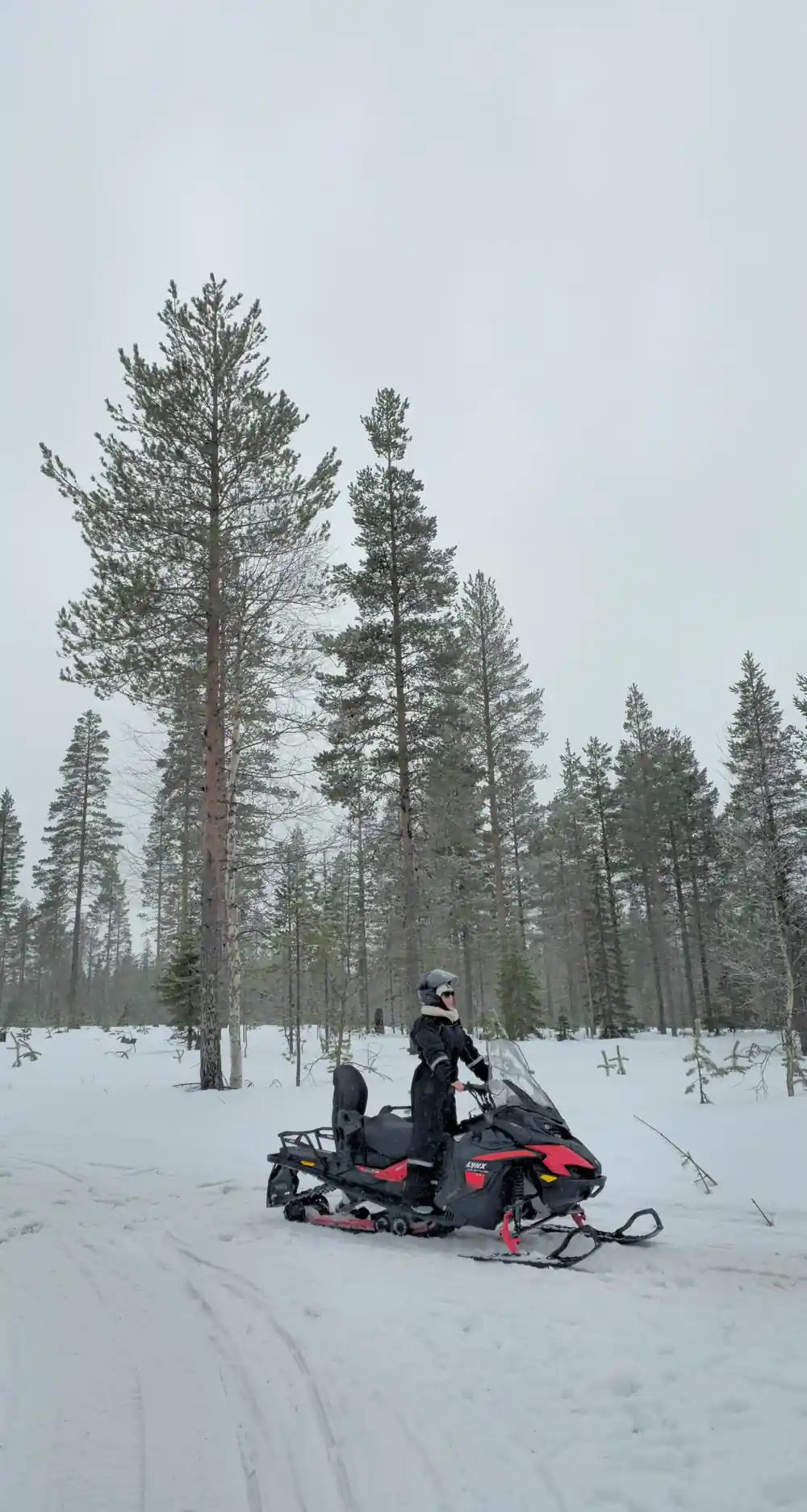
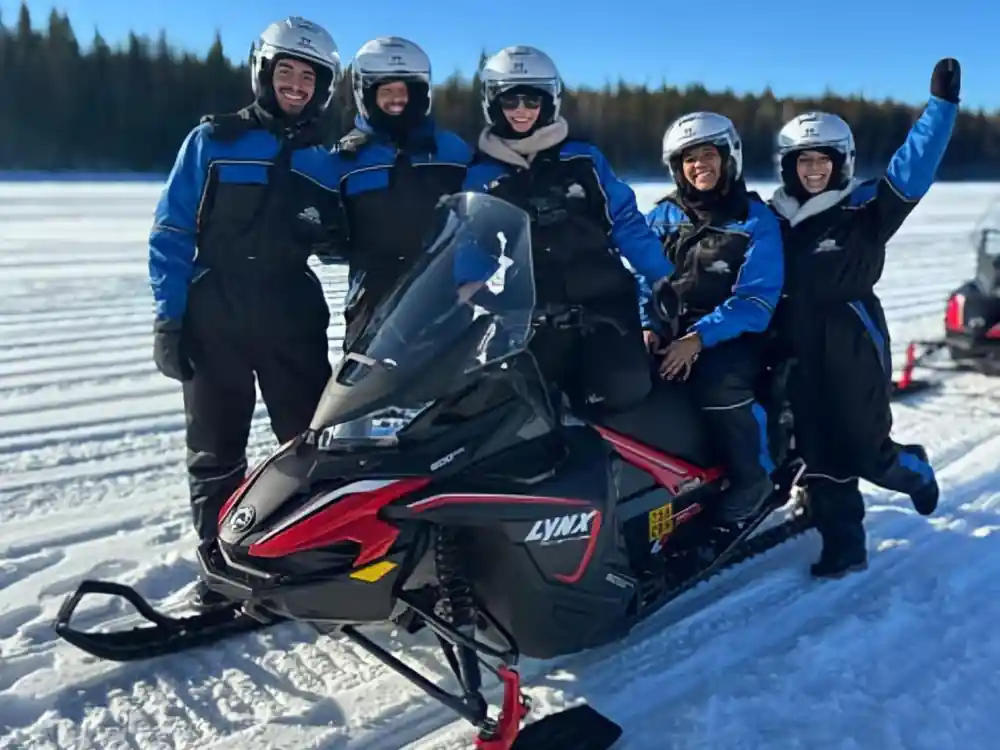
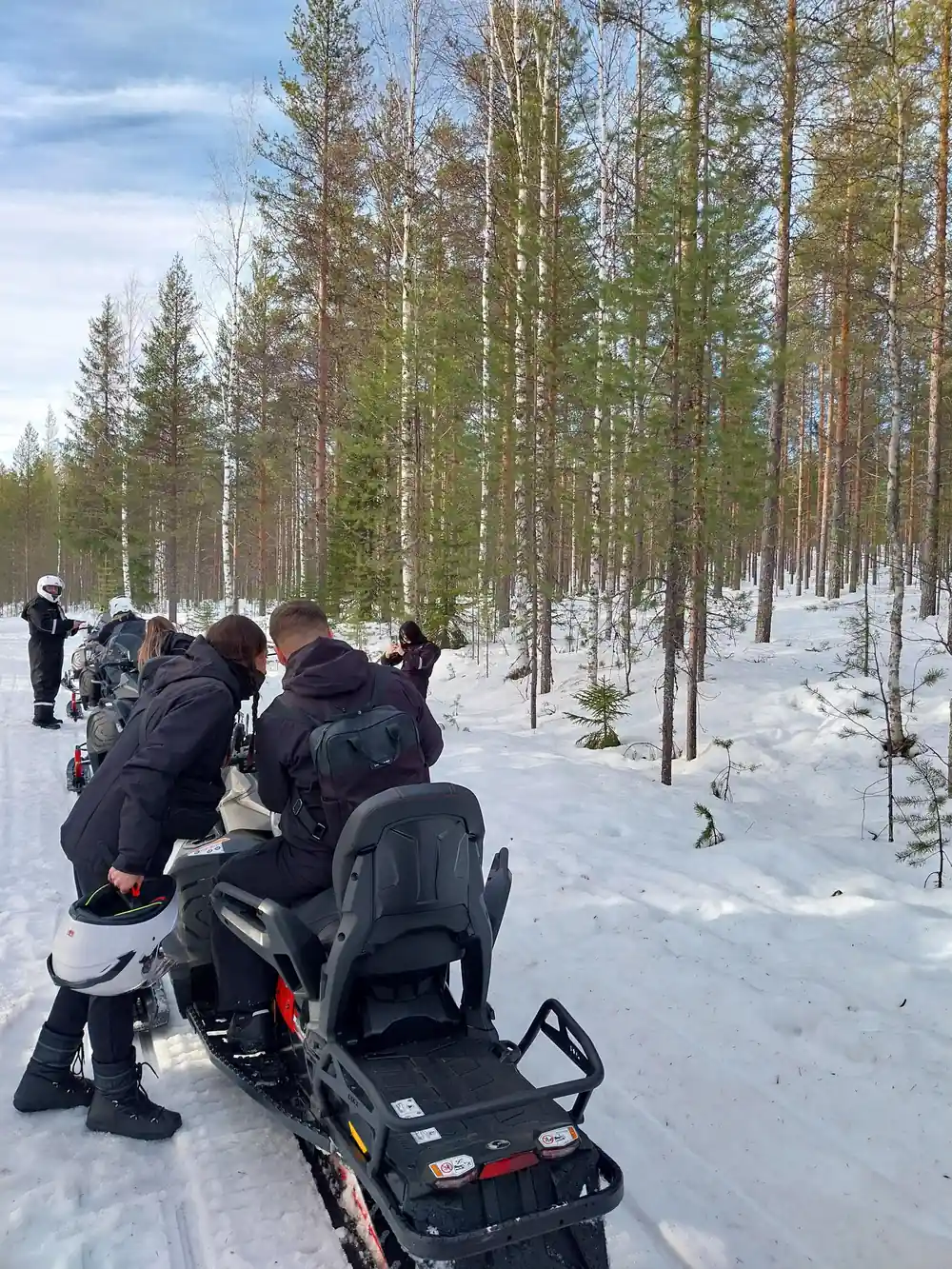
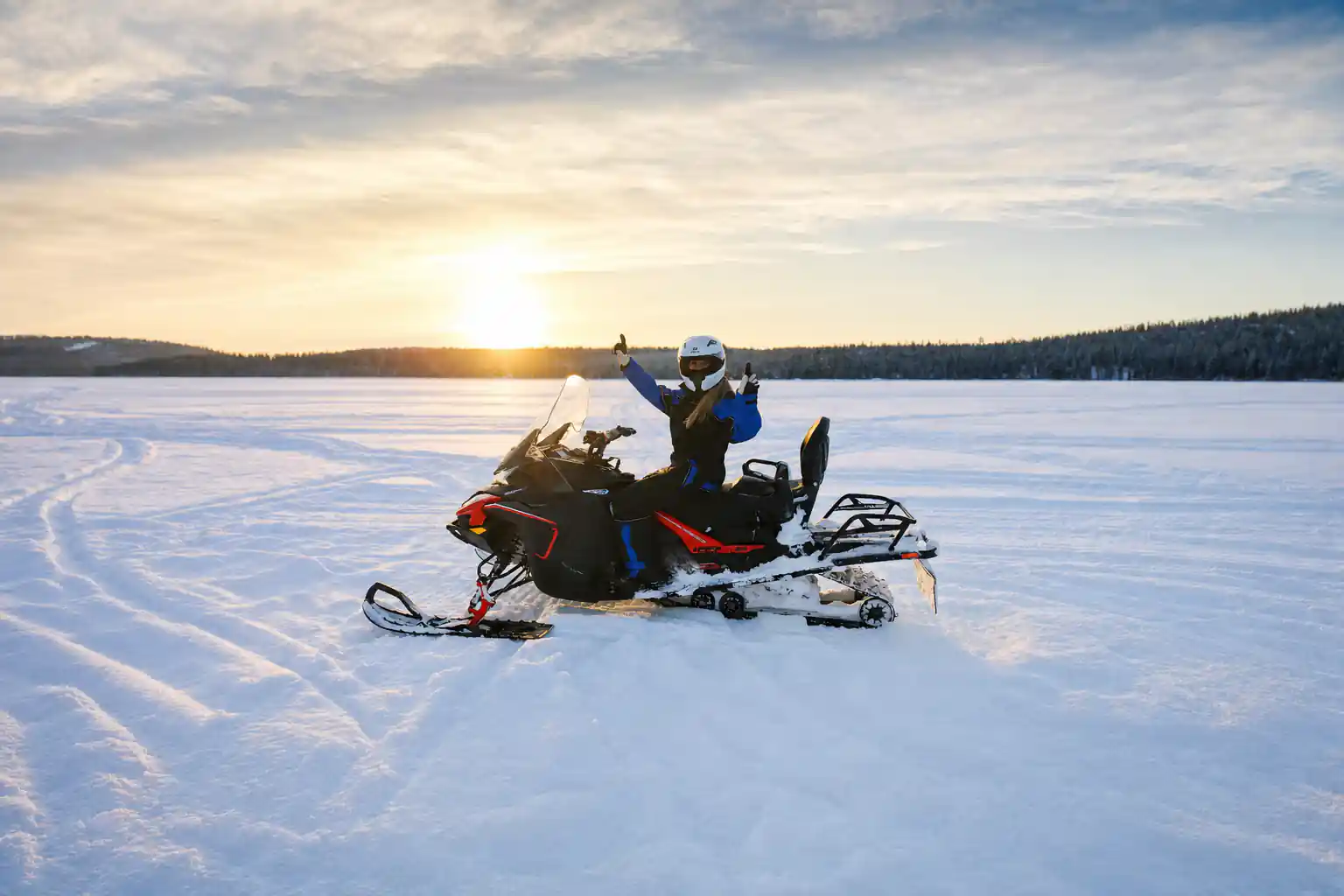
Riders pause on a frozen lake during a winter snowmobile safari in Lapland.
Pregnancy and vibration exclusion
Pregnancy and vibration are a conversation worth having with your doctor and the operator. The 2025 Arctic Safari listing gives you the practical details: 3 hours with an English-speaking guide, reserve now and pay later, and free cancellation up to 24 hours in advance.[1] A call to the operator will give you the pregnancy policy before you commit.
If you decide to join, the practical choices matter. Ask whether you can sit as a passenger rather than drive, and ask the guide to keep the pace steady. Lapland has approximately 2,935 km of official snowmobile routes[9], and the safari uses routes designed for groups. A steady pace, warm clothing and a well-fitting helmet all help make the ride easier.
No tour can promise a perfectly smooth ride on snow, so the pre-booking questions are your best tool. Ask about the route, the pace, and the number of riders in the group. The answer will tell you whether this is the right safari for the person whose comfort matters most.
Age is no barrier for guests in their seventies and beyond
Older guests can enjoy a Rovaniemi snowmobile safari. The legal checkpoint is at the other end of life: in Finland, off-road snowmobiles may be driven by persons aged 15 or over[2]. For older riders, the real test is balance, being able to swing a leg over the seat, and comfort with a machine that moves beneath you.
The safari is not a race. Finland sets the highest snowmobile speed limit in terrain and on routes at 60 km/h, and on ice-covered water areas at 80 km/h, except on routes on ice-covered water areas, where it is 60 km/h[6]. At that pace there is time to look at the snowy trees, feel the cold air on your cheeks and simply enjoy the glide.
If you are less mobile, look for tours with a shorter duration or a passenger option. A three-hour ride[1] is long enough to feel properly in the Arctic, so think about cold tolerance too. Ask if a snowmobile with a passenger seat is available; not every machine has one.
from US$137
The 2025 Arctic Safari in Rovaniemi costs from US$137, lasts 3 hours and includes free cancellation up to 24 hours before.[1]
Asthma, heart conditions and cold exposure
Cold air can be the hidden challenge. In December, temperatures in Rovaniemi average between -4°C and -11°C, and have been known to reach -30°C[3]. On a moving snowmobile, the wind makes the air feel sharper still. For someone with asthma, that sudden intake of cold air can trigger coughing, so carry your reliever inhaler in an inside pocket where it stays warm.
Heart conditions need the same honesty. Raising your heart rate in cold air is normal, but the combination of cold, excitement and light physical effort can be demanding. Talk to your doctor before booking if you have angina, high blood pressure or any condition that makes sudden cold hard to manage. The tour runs for three hours[1], so there is no quick shuttle out if you feel unwell.
For cold-sensitive travellers, small choices make a big difference. A neck warmer, a thin balaclava and chemical hand warmers fit inside a jacket pocket. Keep your core warm and your hands dry, and the minus temperatures become scenery rather than a problem. Remember that snow cover in Rovaniemi lasts for seven months[7], so the guides know how to dress for it.
Muscles and soreness the day after
You may be surprised by what aches the next day. Riders often feel it in the shoulders, forearms, hands and thighs. Holding a snowmobile on a winding trail uses small stabilising muscles that many daily routines ignore. A three-hour safari gives those muscles plenty of time to work[1].
Lapland’s official snowmobile route network is approximately 2,935 km, and a large network runs through forests and fells around Rovaniemi[9]. You do not ride all of it in a morning, but you will cover a good stretch of it. A warm shower, a stretch for the legs, and a hot drink at the campfire help. The landscape around you is a mix of Scots Pine, Norway Spruce and Mountain Birch[10], which is a reminder to look at the view more than the speedometer.
The morning after a safari, gentle movement is better than lying still. Loop your arms overhead, roll your shoulders, and do some lunges to wake up the legs. The soreness usually fades quickly. It is a small price for the memory of riding across a frozen, snow-covered landscape.
Weight, height and fit on a 2025 snowmobile
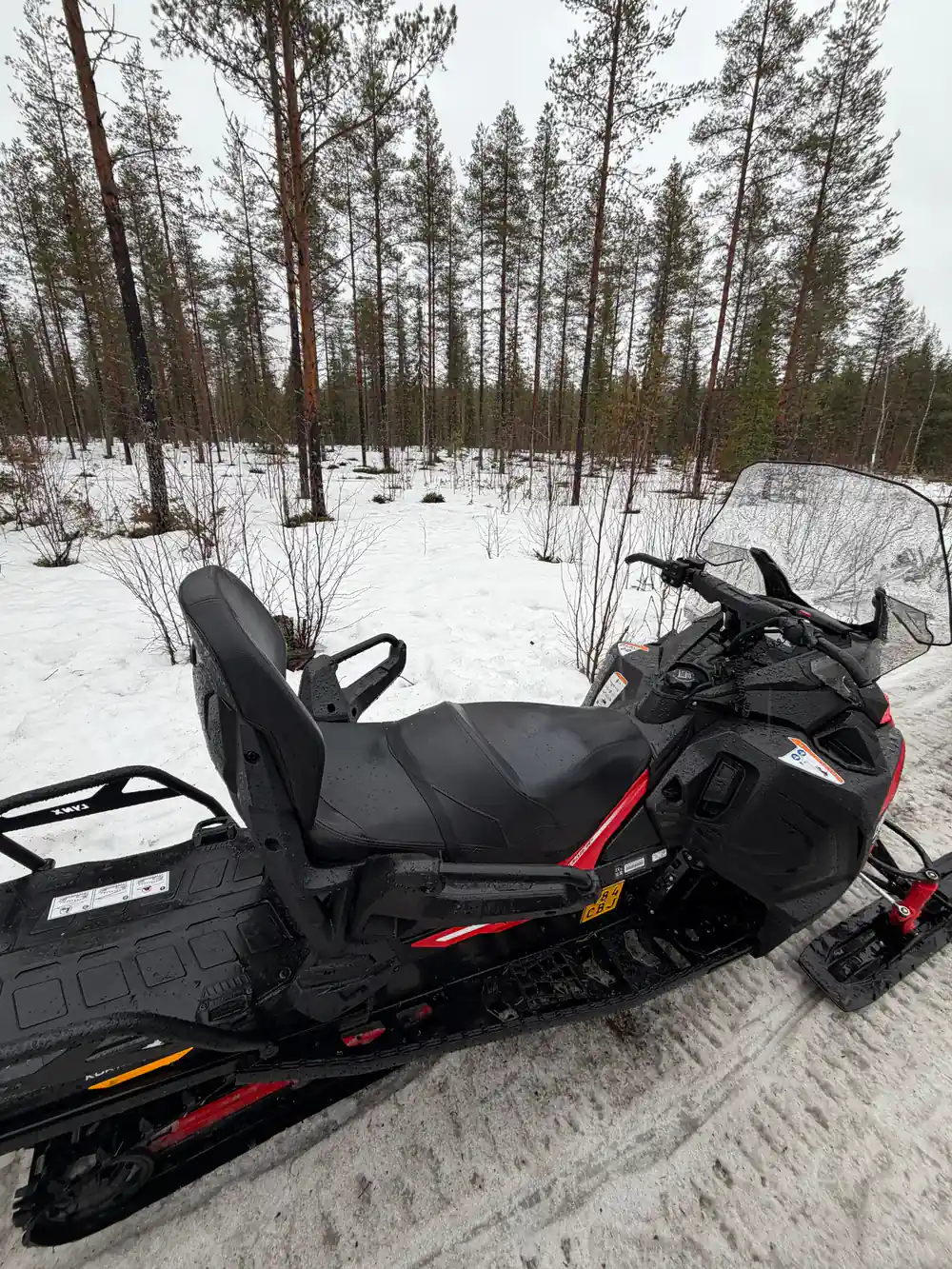
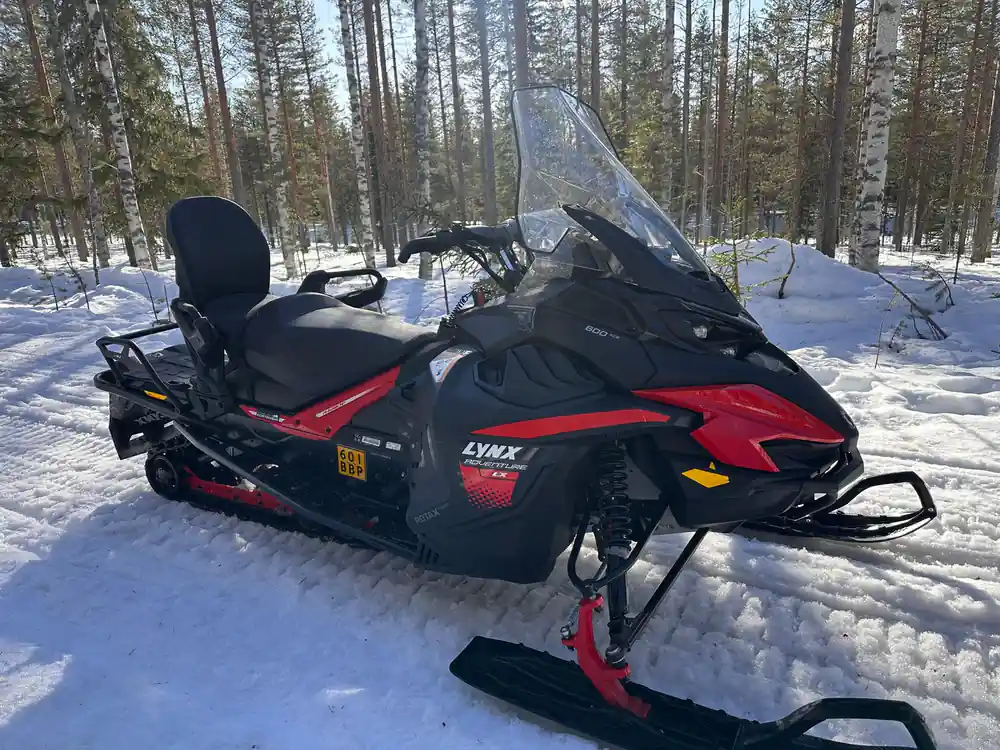
Fitting the machine matters as much as fitness. The new snowmobiles on this Arctic Safari have a raised handlebar, a long seat and wide running boards for your boots. A rider who is tall should check that they can stand comfortably and see over the windscreen. A heavier rider should tell the operator, so the machine’s suspension can be adjusted if needed.
The practical test is to sit on the machine before you set off. Can you reach the handlebar without stretching? Can you put both feet flat on the running boards? If yes, the fit is probably right. Rovaniemi is the kind of place where the Arctic Circle runs through Santa Claus Village, eight kilometres north of the city centre[11], and where over half a million tourists visit each year[12]. A well-fitted machine makes sure you enjoy the ride rather than fight it.
If you are between sizes, trust the operator. Tell them your height and inside leg when booking, and they can suggest the machine that suits you. Rovaniemi is a welcoming place for first-time snowmobilers, with over half a million tourists visiting each year[12], so the guides are used to every shape and size of rider.
Which Rovaniemi tour has the most reviews?
Compare Rovaniemi snowmobile safari prices
Prices are from[1],[4] and[5]; no child price is shown.
When to book your Rovaniemi snowmobile safari
Plan your ride
Book your slot
Reserve now and pay later, with free cancellation up to 24 hours in advance.[1]
Check the weather
December averages -4°C to -11°C and can reach -30°C, so pack layers.[3]
Dress and move
Use thermal layers, windproof shell and sturdy boots; bend knees over bumps.
Follow the guide
The safari has an English-speaking guide; stay behind the lead machine.[1]
Warm up after
Expect shoulder, forearm and thigh stiffness; stretch and warm up slowly.
Ready to feel the Arctic wind on a brand-new machine?
from US$137Reserve now & pay later